
การแนะนำ
A dental air compressor is often called the “heart” of a dental clinic. While patients rarely see it, nearly every dental procedure depends on a reliable supply of clean, dry, and oil-free compressed air. High-speed handpieces, air-water syringes, sandblasters, dental chairs, sterilization equipment, and various dental instruments all rely on compressed air to function correctly.
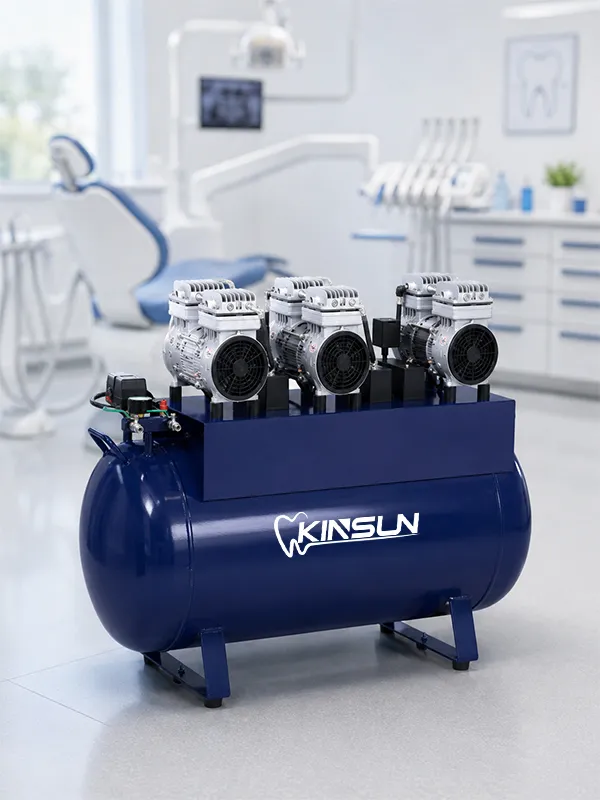
Choosing the wrong compressor can lead to frequent equipment failures, unstable pressure, excessive maintenance costs, poor treatment outcomes, and even damage to expensive dental handpieces. On the other hand, investing in the right dental air compressor can improve clinic efficiency, extend equipment lifespan, and reduce long-term operating costs.
This comprehensive buying guide explains everything dental professionals, distributors, and equipment buyers need to know before purchasing a dental air compressor.
Why Dental Air Compressors Are Different from Standard Air Compressors
Many first-time buyers assume that any air compressor can be used for dental applications. This is a costly mistake.
Dental clinics require compressed air that is:
- Oil-free
- Dry
- Clean
- Odor-free
- Stable in pressure
- Suitable for medical environments
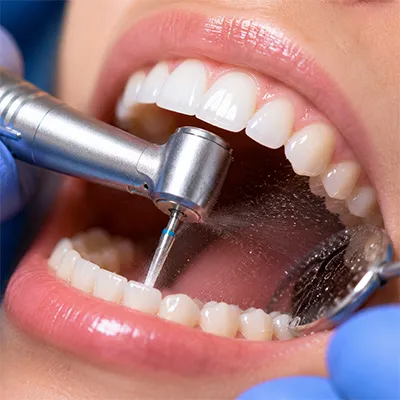
Industrial compressors often contain oil, moisture, and contaminants that can damage dental equipment and compromise treatment quality.
For this reason, modern clinics almost exclusively use oil free dental air compressors specifically designed for healthcare applications.
Understanding the Role of Compressed Air in Dentistry
Compressed air is used throughout the dental treatment process.
Applications include:
- Dental handpieces
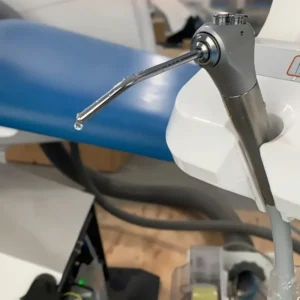
- Air-water syringes
- Air polishing systems
- Sandblasting equipment
- Dental chair control systems
- Sterilization equipment
- Laboratory equipment
- Oxygen generation systems
Without a reliable compressed air source, many dental procedures simply cannot be performed.
This is why compressor reliability should always be prioritized over initial purchase price.
Oil-Free vs Oil-Lubricated Dental Air Compressors
One of the most important purchasing decisions is choosing between oil-free and oil-lubricated technology.
Why Oil-Free Technology Is Essential
Medical and dental compressed air systems should deliver air that is completely free from oil contamination.
An oil free dental air compressor provides several important benefits:
- Eliminates oil contamination risks
- Protects patients from inhaling oil particles
- Reduces maintenance requirements
- Improves air quality
- Prevents damage to dental instruments
- Supports infection control standards
Because of these advantages, oil-free systems have become the global standard for modern dental practices.
Why Dry Air Matters in Dentistry
Many clinics underestimate the dangers of moisture in compressed air systems.
Compressed air naturally contains water vapor. During compression, this moisture condenses and accumulates inside the system.
If moisture is not removed effectively, serious problems can occur.
Problems Caused by Moisture
Moist compressed air may lead to:
- Premature dental handpiece failure
- Bearing damage
- Corrosion inside air lines
- Rust inside tanks
- Damage to dental chair components
- Reduced lifespan of instruments

More importantly, moisture can negatively affect restorative procedures.
For example, when a dentist prepares a tooth for crown bonding and uses an air syringe to dry the surface, moisture-contaminated air may leave microscopic water droplets on the tooth. When adhesive and restorative materials are applied, trapped moisture can weaken the bond and eventually lead to restoration failure.
This increases maintenance costs and can negatively impact patient satisfaction.
Why Every Clinic Should Choose a Dental Air Compressor with Dryer
A dental air compressor with dryer is one of the smartest investments a clinic can make.
The dryer removes moisture before compressed air reaches dental equipment.
Benefits include:
- Cleaner air
- Lower dew point
- Reduced corrosion
- Improved bonding outcomes
- Longer equipment lifespan
- Lower repair costs
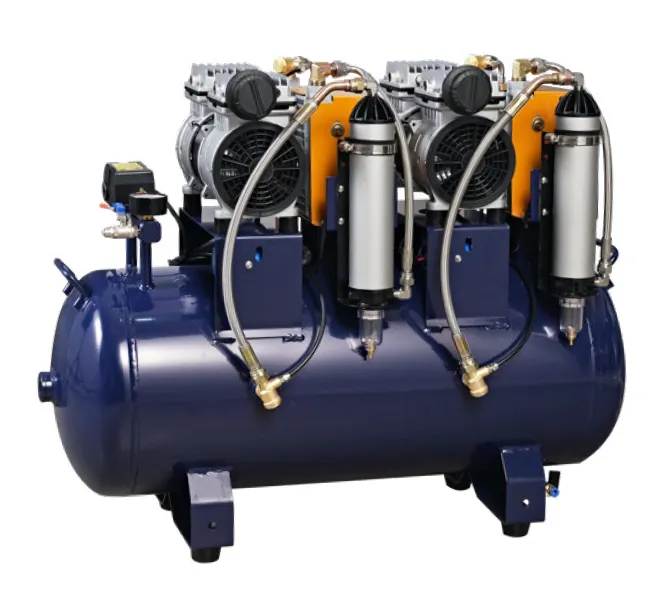
Many experts recommend combining:
- Refrigerated dryer
- Desiccant dryer
This combination can remove up to 95% of moisture from compressed air.
If your existing system lacks a dryer, upgrading the system may be one of the most cost-effective improvements available.
How to Determine the Right Compressor Size
Choosing the correct capacity is essential.
An undersized compressor may struggle to keep up with demand, causing pressure fluctuations and excessive wear.
An oversized compressor may waste energy and increase operating costs.
Dental Air Compressor for 1 Chair
Recommended for:
- Solo practitioners
- Home dental clinics
- Mobile dentistry
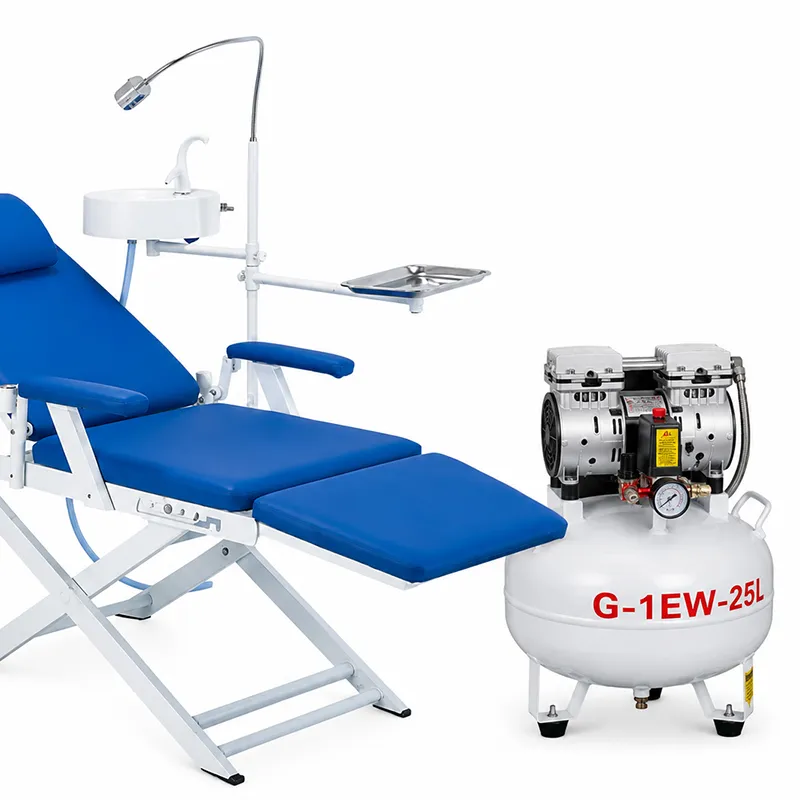
Typical requirements:
- 550–750W motor
- 30–40L air tank
Dental Air Compressor for 2 Chairs
Recommended for:
- Small dental practices
- Orthodontic clinics
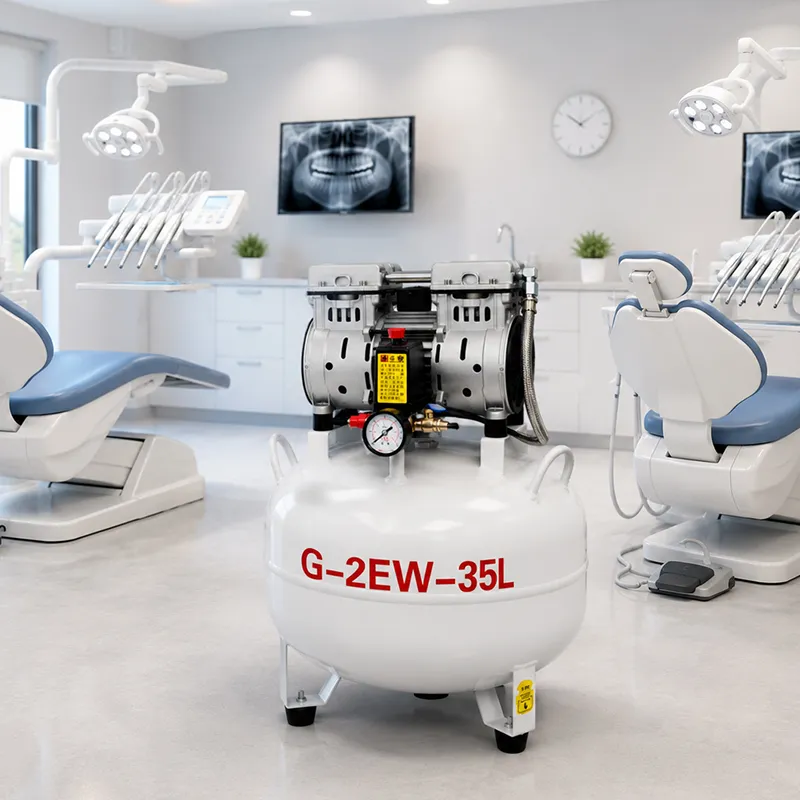
Typical requirements:
- 750–1500W motor
- 50–70L air tank
Dental Air Compressor for 4 Chairs
Recommended for:
- Multi-doctor clinics
- Growing practices
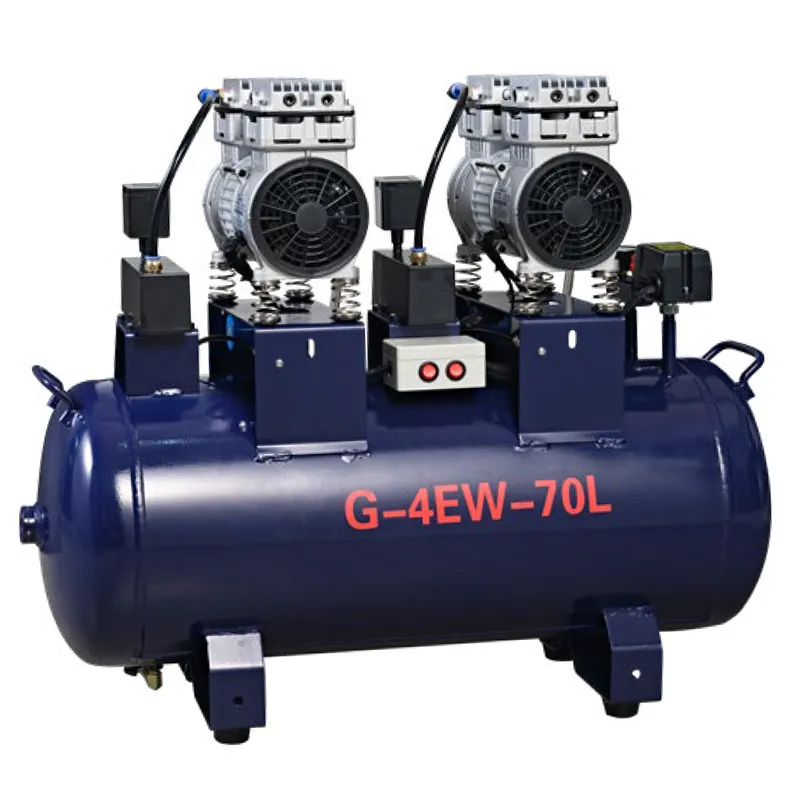
Typical requirements:
- Dual-cylinder systems
- 90–120L air tank
Dental Air Compressor for 6 to 8 Chairs
Recommended for:
- Large clinics
- Dental hospitals
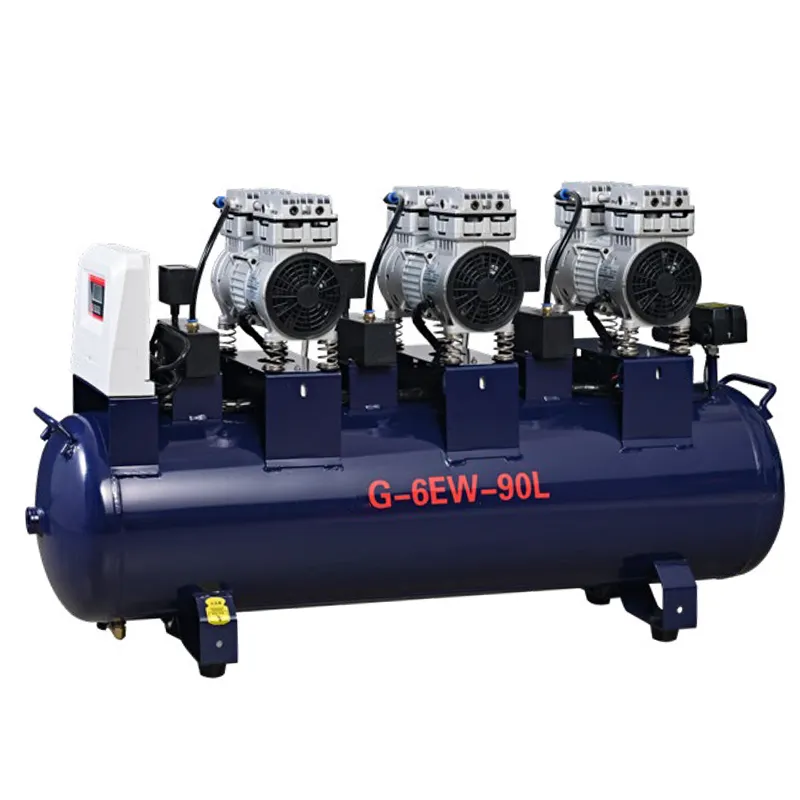
Typical requirements:
- Multiple compressor heads
- Advanced air drying systems
- Centralized compressed air networks
Always consider future expansion when selecting compressor capacity.
Why Stable Air Pressure Is Critical
Pressure stability directly affects clinical performance.
Most dental systems operate between:
- 5–8 Bar
- 70–115 PSI
Pressure fluctuations may cause:
- Reduced handpiece performance
- Poor air-water syringe operation
- Inconsistent scaler performance
- Treatment interruptions
A quality dental compressor should provide stable airflow throughout the working day, even during peak usage periods.
The Importance of Silent Dental Air Compressors
Noise pollution is often overlooked during equipment selection.
Dental compressors frequently operate inside clinics, treatment rooms, or utility spaces near patients.
Excessive noise may:
- Increase patient anxiety
- Distract dental staff
- Reduce workplace comfort

A modern silent dental air compressor generally operates between 55 and 70 dB.
Benefits include:
- Improved patient experience
- Better working environment
- Flexible installation options
- Reduced stress levels
For most clinics, low-noise operation should be considered a major purchasing factor.
Key Features to Look for When Buying a Dental Air Compressor
Not all compressors are created equal.
Before purchasing, evaluate the following features carefully.
Integrated Air Dryer
Reduces moisture contamination.
Automatic Drain System
Removes condensate automatically.
Large Air Storage Tank
Improves pressure stability.
Multiple Filtration Stages
Ensures cleaner compressed air.
Low Noise Design
Improves clinic comfort.
Energy Efficiency
Reduces operating costs.
Easy Maintenance Access
Simplifies routine servicing.
Spare Parts Availability
Ensures long-term support.
Common Mistakes Buyers Make
Choosing Based on Price Alone
The cheapest compressor often becomes the most expensive over time due to repairs and downtime.
Buying an Undersized Compressor
Small compressors may struggle during peak demand.
Ignoring Air Dryer Requirements
Moisture-related problems can become extremely expensive.
Overlooking Maintenance Requirements
A compressor that is difficult to service often leads to higher ownership costs.
Neglecting Future Growth
Many clinics expand within a few years.
Selecting a slightly larger system often provides better long-term value.
Dental Air Compressor Maintenance Considerations Before Purchase
The best buying decision includes evaluating maintenance requirements.
Look for compressors with:
- Accessible filters
- Easy tank drainage
- Modular design
- Readily available spare parts
- Simple dryer servicing
Regular dental air compressor maintenance helps prevent:
- Moisture contamination
- Pressure loss
- Excessive wear
- Unexpected downtime
A well-maintained compressor can provide reliable operation for more than a decade. If you want your dental air compressor to last longer, you can check out our dental air compressor repair and maintenance guide.
How Long Should a Dental Air Compressor Last?
A quality compressor typically lasts:
- 8–15 years in most clinics
- Longer with excellent maintenance
Factors affecting lifespan include:
- Daily workload
- Air quality
- Maintenance frequency
- Environmental conditions
- Dryer performance
Investing in quality equipment usually results in lower lifetime ownership costs.
When Should You Replace an Existing Compressor?
Consider replacement if:
- Equipment is over 10–15 years old
- Repair costs exceed 50% of replacement value
- Air quality no longer meets standards
- Major components fail repeatedly
- Clinic demand has increased significantly
Newer systems often provide:
- Better energy efficiency
- Lower noise levels
- Improved air quality
- More reliable performance
Why Reliability Matters More Than Price
The true cost of a compressor is not its purchase price.
The real cost includes:
- Downtime
- Maintenance
- Repairs
- Lost productivity
- Equipment damage
- Treatment delays
A reliable dental air compressor operates quietly in the background, allowing dentists and staff to focus entirely on patient care.
For this reason, stability, air quality, and reliability should always take priority over saving a few dollars upfront.
บทสรุป
Choosing the best dental air compressor is a critical investment for any dental practice. The ideal system should provide clean, dry, oil-free compressed air while maintaining stable pressure, low noise levels, and minimal maintenance requirements.
When evaluating a new compressor, focus on key factors such as oil-free technology, integrated drying systems, proper sizing, energy efficiency, and long-term reliability. A high-quality dental air compressor with dryer may cost more initially, but it will significantly reduce maintenance expenses, protect expensive instruments, and improve overall clinic performance.
For modern dental clinics, the best choice is typically a silent oil free dental air compressor equipped with a professional air drying system, automatic drainage, and sufficient capacity to support both current and future operational needs.
By making the right purchasing decision today, you can ensure years of reliable performance, lower operating costs, and a better experience for both clinicians and patients.
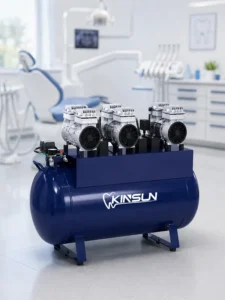
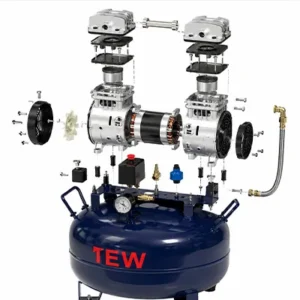
Kinsun Dental Compressors Feature a Unique Design.
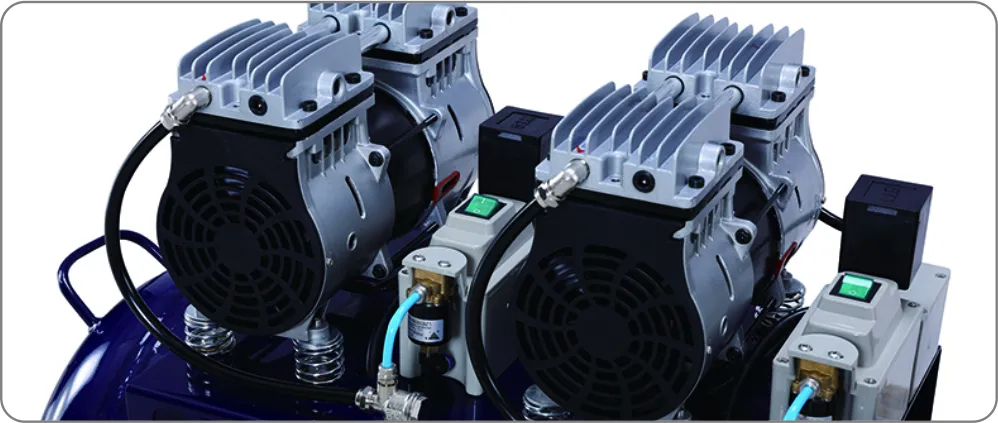
Dual-switch independent control system
The dual-switch independent control system facilitates maintenance and after-sales service.
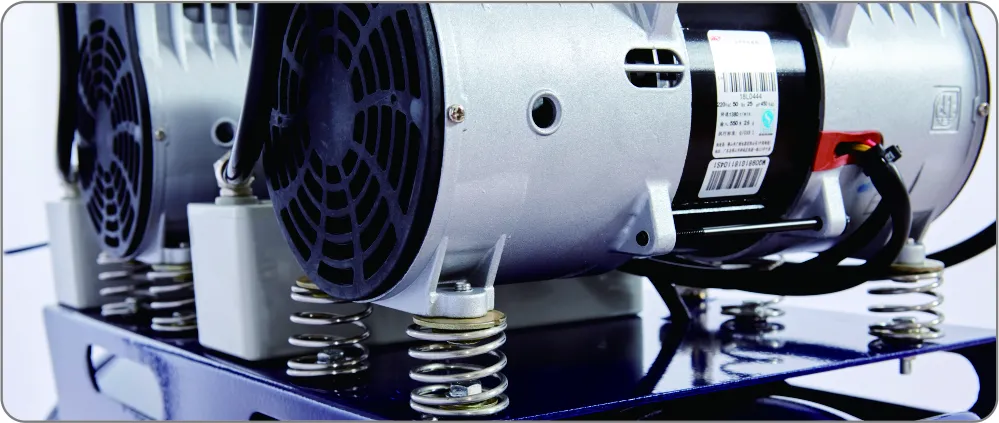
Spring shock absorber base
The spring base not only protects the casing but also greatly reduces noise.
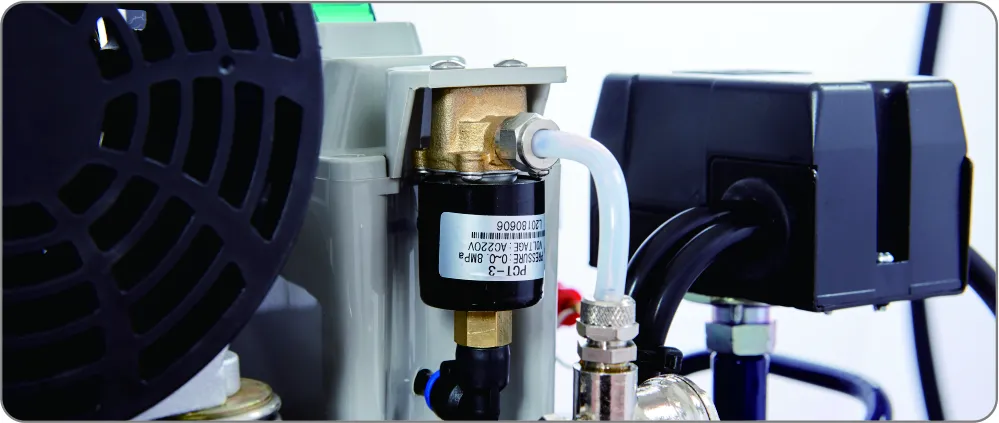
Customized solenoid valve
Custom-designed solenoid valves are safe, durable, and reduce the risk of downtime.
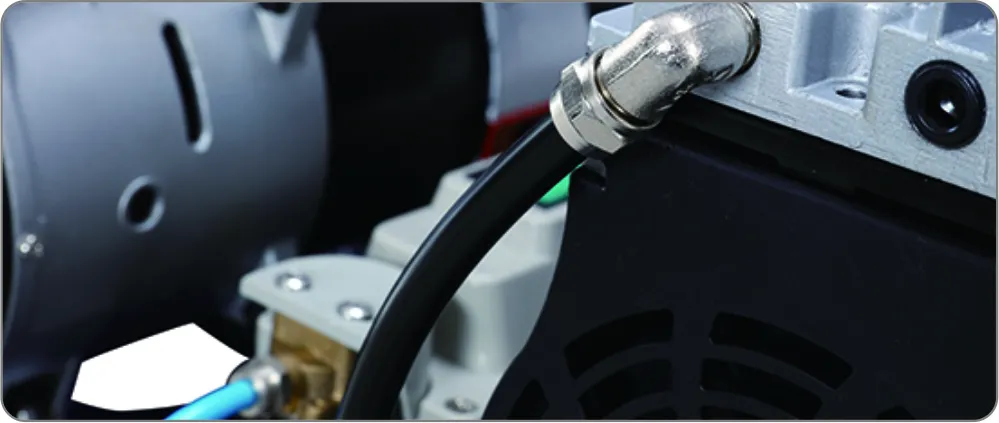
High-quality trachea
High-quality air hoses can withstand 16KG of air pressure and 120 degrees Celsius, ensuring the stability of the air compressor.
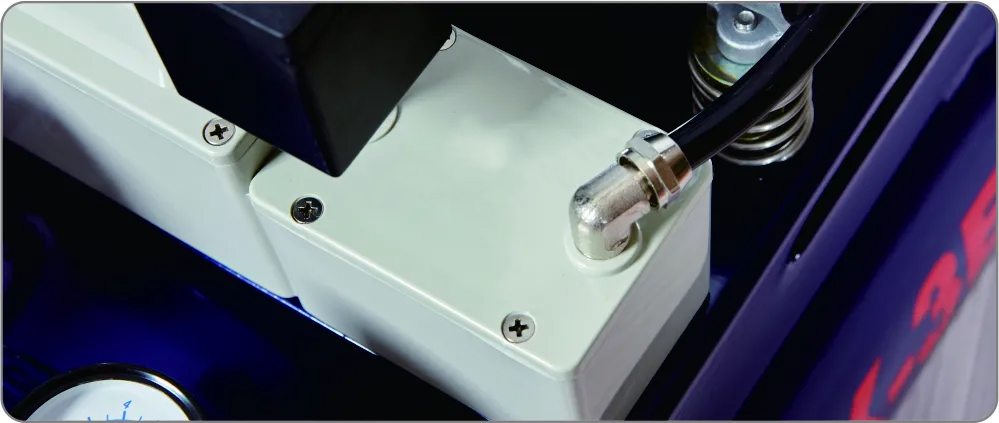
Integrated silencer box
The integrated muffler box effectively reduces intake noise.
Why Choose Kinsun Dental?
Kinsun Dental specializes in supplying high-quality dental air compressors, dental chair parts, and dental equipment accessories for distributors, dealers, and clinics worldwide.
Our product range includes:
- Oil Free Dental Air Compressors
- Dental Air Compressors with Dryer
- Silent Dental Air Compressors
- Dental Compressor Systems for 1–8 Chairs
- Air Dryer Components
- Filters and Regulators
- Dental Chair Spare Parts
With over 10 years of industry experience, Kinsun Dental provides dependable products, competitive pricing, and professional support for global B2B customers.