

Dental lighting plays a critical role in diagnosis, treatment accuracy, color matching, and overall clinical efficiency. Whether performing restorative procedures, endodontic treatment, oral surgery, or cosmetic dentistry, dentists rely heavily on proper illumination to achieve precise results.
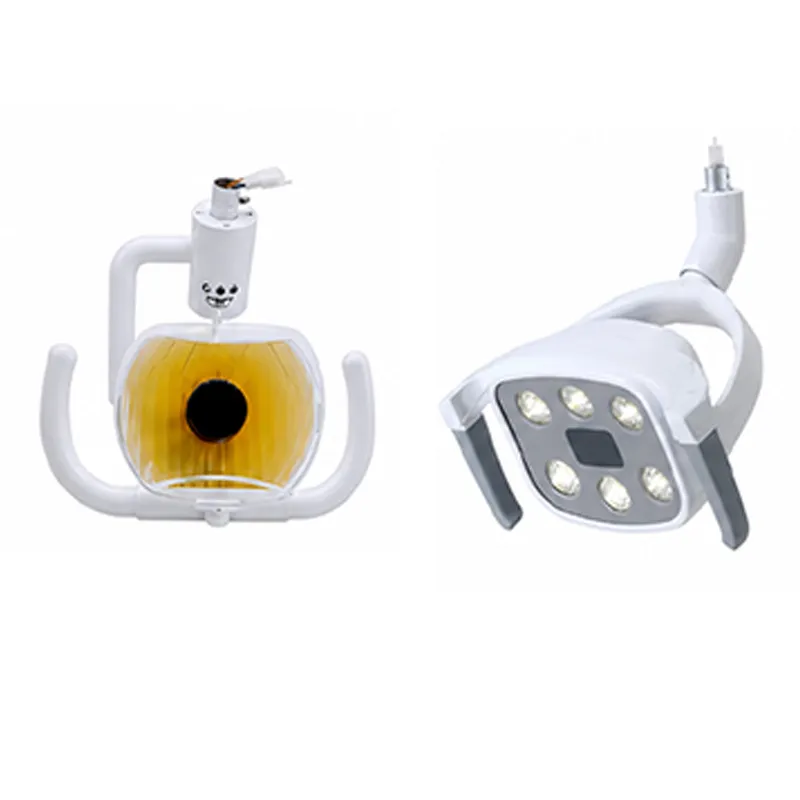
For decades, halogen dental lights were considered the standard choice for dental chairs and dental treatment units. However, LED dental lights have rapidly become the dominant technology in modern dentistry due to their energy efficiency, longer lifespan, lower heat generation, and improved color rendering.
Yet the discussion is no longer simply about brightness or cost. Recent studies have raised new questions regarding blue light exposure, occupational eye health, and long-term retinal safety among dental professionals.
This guide compares LED vs halogen dental light systems in terms of performance, operating cost, patient comfort, clinical applications, and safety to help dental clinics, distributors, and equipment manufacturers make informed decisions.
What Is a Halogen Dental Light?
A halogen dental light uses a tungsten filament enclosed inside a quartz bulb filled with halogen gas. When electrical current passes through the filament, it generates light through heat.
For many years, halogen technology was the primary illumination system used in dental chairs.
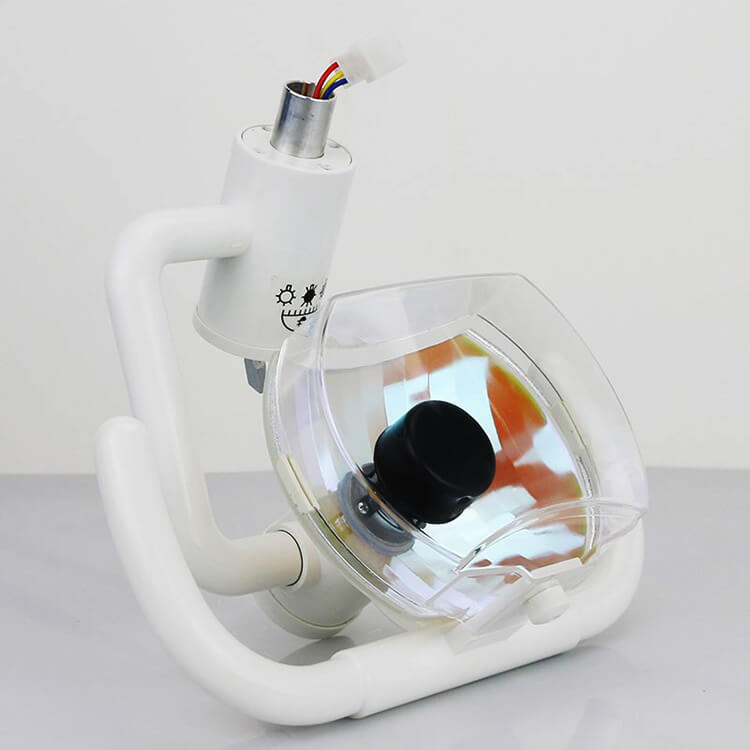
Typical characteristics include:
- Color temperature: 3,200K–3,800K
- High infrared heat generation
- Moderate color rendering
- Relatively low purchase cost
- Frequent bulb replacement
Halogen lights produce warm yellowish light that many experienced dentists are familiar with. However, this technology suffers from several limitations, including high power consumption and substantial heat output.
As dental procedures become increasingly precise and esthetic, these limitations have encouraged the industry to adopt more advanced lighting technologies.
What Is an LED Dental Light?
LED stands for Light Emitting Diode. Unlike halogen bulbs, LEDs generate light through semiconductor technology rather than heating a filament.
Modern LED dental operating lights typically contain multiple high-performance LED chips arranged to produce uniform illumination across the oral cavity.
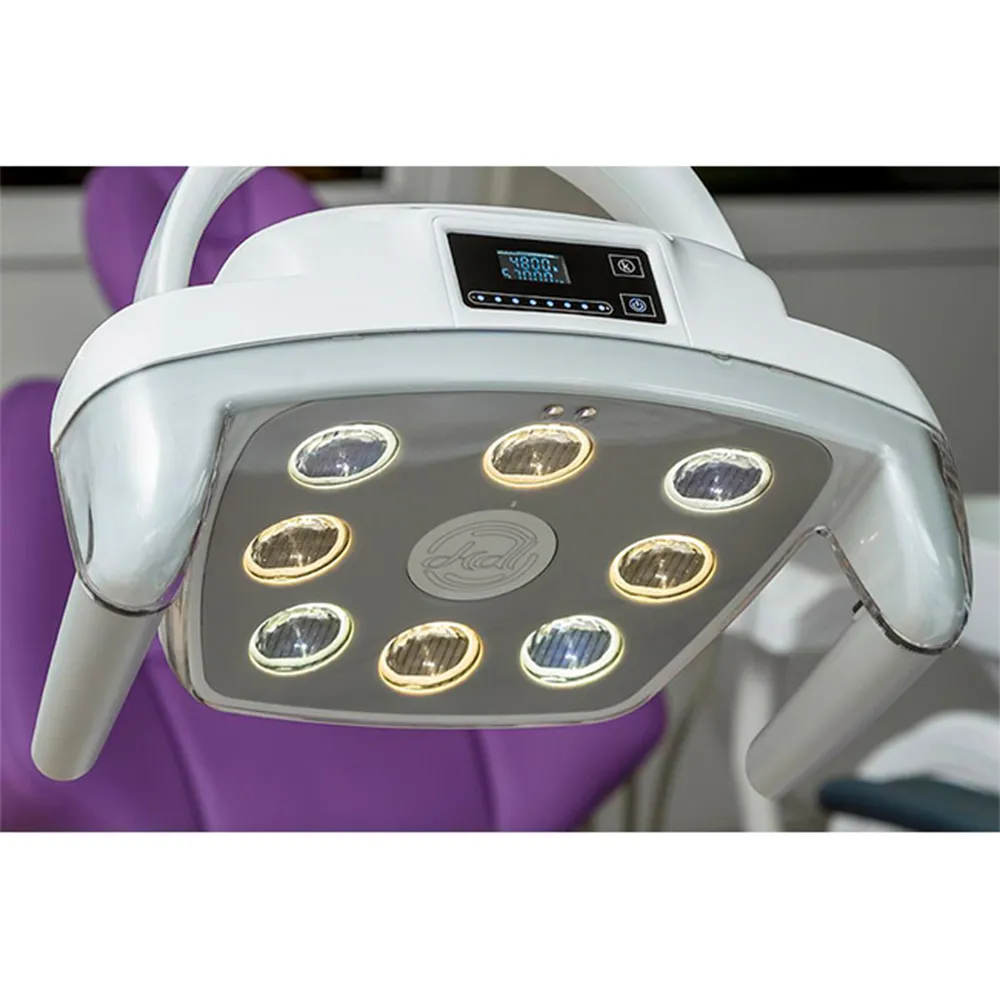
Typical LED characteristics include:
- Color temperature: 5,000K–6,500K
- Lifespan up to 50,000 hours
- Low energy consumption
- Minimal heat emission
- High color rendering index
- Adjustable brightness settings
Because LED dental lights closely mimic natural daylight, they have become particularly popular in cosmetic dentistry, prosthodontics, and shade matching procedures.
Many modern dental chair lights also incorporate touchless sensors, cure-safe modes, and adjustable color temperatures.
LED vs Halogen Dental Light: Quick Comparison
| Feature | LED Dental Light | Halogen Dental Light |
|---|---|---|
| Lifespan | Up to 50,000 hours | Around 1,000 hours |
| Power Consumption | 15–30W | 50–100W |
| Heat Output | Very low | High |
| Color Temperature | 5,500–6,500K | 3,200–3,800K |
| Light Uniformity | Excellent | Moderate |
| Maintenance | Minimal | Frequent |
| Operating Cost | Low | High |
| Composite Safety Mode | Available | Rare |
| Energy Efficiency | Excellent | Poor |
| Patient Comfort | High | Moderate |
For most modern clinics, LED dental lights outperform halogen systems in nearly every category.
Energy Efficiency and Operating Cost
One of the biggest advantages of LED dental lights is their energy efficiency.
Traditional halogen bulbs convert much of their electrical energy into heat instead of usable light. As a result, they consume significantly more electricity while producing less illumination.
A typical halogen dental light may require 50 to 100 watts of power, while an LED dental chair light often operates at only 15 to 30 watts.
For clinics operating multiple treatment rooms, this difference can substantially reduce electricity costs over time.
The longer lifespan of LED lights also reduces maintenance expenses.
A halogen bulb may need replacement every 1,000 hours, whereas a quality LED dental light can continue functioning for up to 50,000 hours.
This means:
- Less downtime
- Fewer maintenance visits
- Reduced inventory costs
- Lower replacement expenses
When calculating the total cost of ownership, LED lights are usually more economical despite their higher initial purchase price.
Color Temperature and Shade Matching
Color accuracy is extremely important in modern dentistry.
Procedures such as veneers, crowns, composite restorations, and cosmetic treatments require dentists to distinguish subtle differences in tooth shades.
Halogen dental lights typically operate between 3,200K and 3,800K, producing a warm yellow light.
LED dental lights generally operate between 5,500K and 6,500K, which closely resembles natural daylight.
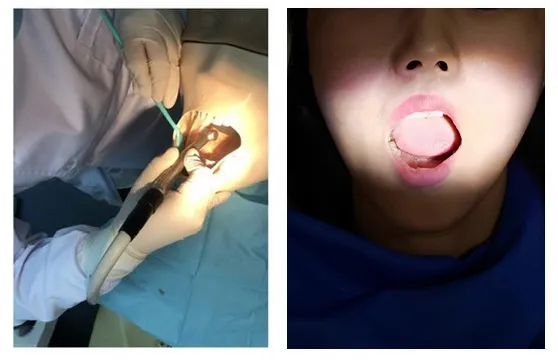
This daylight effect provides several advantages:
- More accurate shade selection
- Better visualization of soft tissues
- Improved diagnosis
- Reduced color distortion
Many high-quality LED dental lights also achieve a high Color Rendering Index (CRI), often above 90.
A high CRI allows dentists to see natural colors more accurately, which is particularly important in esthetic dentistry.
For clinics performing restorative and cosmetic procedures, LED dental lighting offers significant advantages over halogen systems.
Heat Generation and Patient Comfort
Heat generation represents one of the largest differences between LED and halogen dental lights.
Halogen bulbs generate considerable infrared radiation because they rely on heated filaments to produce light.
During long procedures, this heat can create several problems:
- Patient discomfort
- Increased chair temperature
- Drying of oral tissues
- Additional operator fatigue
Some traditional halogen lights may reach surface temperatures above 80°C.
By comparison, LED dental lights are considered cold light sources.
Because LEDs produce very little infrared radiation, the operating temperature is significantly lower.
Benefits include:
- Improved patient comfort
- Reduced risk of soft tissue irritation
- Better working conditions
- Lower ambient heat
Many patients notice the difference immediately during lengthy procedures.
Light Uniformity and Shadow Control
Dental procedures require consistent illumination throughout the oral cavity.
Poor lighting can create shadows that interfere with visibility and increase eye fatigue.
Traditional halogen lights often produce a bright center spot with decreasing illumination toward the edges.
This uneven distribution may result in:
- Shadows
- Visual fatigue
- Reduced treatment accuracy
Modern LED dental lights use multiple LED sources arranged strategically to create a more uniform light field.
Benefits include:
- Better illumination of posterior teeth
- Reduced shadows
- Improved depth perception
- Lower eye strain
Multi-point LED systems can also maintain consistent brightness even when the dentist changes position.
For endodontics, implant dentistry, and surgical procedures, this improvement can significantly enhance clinical performance.
Composite Curing and Cure-Safe Technology
An important issue in restorative dentistry is premature polymerization of composite materials.
Many composite resins use camphorquinone as a photoinitiator.
This material is highly sensitive to blue wavelengths.
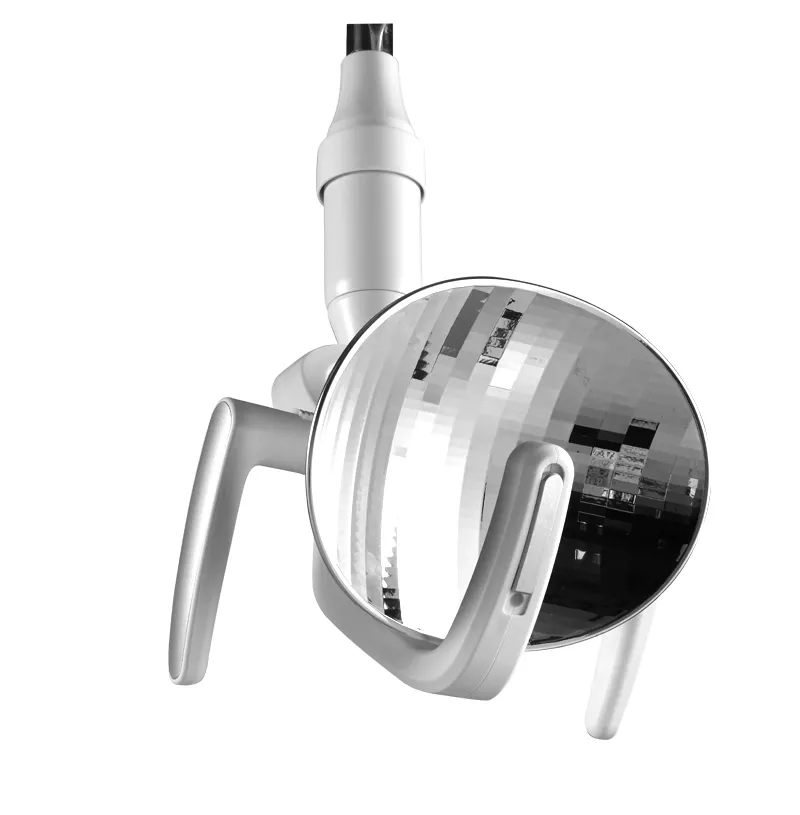
Standard white LED lights may emit blue light that can unintentionally begin curing dental composites before the dentist is ready.
This is why many modern LED dental lights include cure-safe modes.
These modes reduce or filter specific blue wavelengths, allowing dentists to:
- Place composites more accurately
- Extend working time
- Improve restoration quality
Halogen lights generally lack this advanced spectral control.
For restorative dentistry, cure-safe LED technology has become a major advantage.
Eye Safety and Blue Light Exposure
One of the newest topics in dental lighting research involves occupational eye safety.
Dentists spend thousands of hours working under intense lighting systems at close distances.
Recent studies suggest that prolonged exposure to blue-rich light may contribute to retinal stress.
White LEDs contain blue wavelengths that are converted into white light using phosphor coatings.
Researchers have investigated whether these blue components may affect retinal cells during long-term exposure.
Several findings suggest:
- Blue wavelengths may increase oxidative stress.
- Retinal pigment cells may be vulnerable.
- Long-term exposure requires further investigation.
Importantly, current evidence does not suggest that dentists should avoid LED dental lights.
Instead, the findings emphasize:
- High-quality optical design
- Proper spectral control
- Appropriate brightness settings
- Occupational eye protection
Clinics can reduce potential risks by selecting professional dental lights that incorporate blue light management technologies.
Occupational Eye Protection for Dentists
Because dentists spend many years working under treatment lights, eye protection is increasingly important.
Recommended measures include:
Regular Eye Examinations
Dental professionals should undergo routine ophthalmologic evaluations.
Protective Eyewear
Anti-blue light glasses may help reduce exposure.
Proper Light Positioning
Lights should be adjusted correctly to avoid unnecessary reflection.
Adjustable Brightness
Avoid using maximum illumination when unnecessary.
Quality Equipment
Poor-quality LED lights may produce uneven spectra and excessive blue peaks.
By combining modern equipment with proper occupational practices, dentists can minimize potential risks.
Should You Upgrade from Halogen to LED?
Many dental clinics still operate older chairs equipped with halogen lights.
Upgrading to LED dental lights may provide several advantages.
You should consider upgrading if:
- Bulbs require frequent replacement.
- Heat causes discomfort.
- Energy costs are increasing.
- Shade matching is difficult.
- The clinic performs cosmetic dentistry.
- Composite procedures are common.
- Eye fatigue is a concern.
Many dental chair manufacturers now offer retrofit LED systems that can replace traditional halogen lamps.
The investment often pays for itself through reduced maintenance costs and improved clinical efficiency.
How to Choose a High-Quality LED Dental Light
Not all LED dental lights are equal.
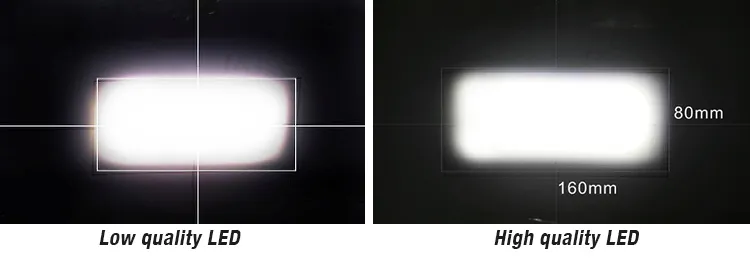
When selecting a dental operating light, consider the following factors.
Illumination Range
Recommended illumination is generally between 8,000 and 50,000 lux.
Color Temperature
The ideal range is 5,500K to 6,500K.
Color Rendering Index
A CRI above 90 provides better color accuracy.
Uniform Light Field
Look for shadow reduction technology.
Cure-Safe Mode
Important for restorative procedures.
Touchless Sensors
Improve infection control.
Blue Light Management
Modern systems may optimize spectral output.
Consider Kinsun’s Dental Chair Light for You
After comparing LED vs halogen dental light technologies, many dental professionals are looking for a lighting solution that combines energy efficiency, natural illumination, and long-term reliability.
Kinsun Dental provides modern dental chair lights designed for dental clinics, equipment distributors, and dental chair manufacturers worldwide. Our LED dental lights are developed to deliver consistent illumination, low heat generation, and comfortable operation during daily clinical procedures.
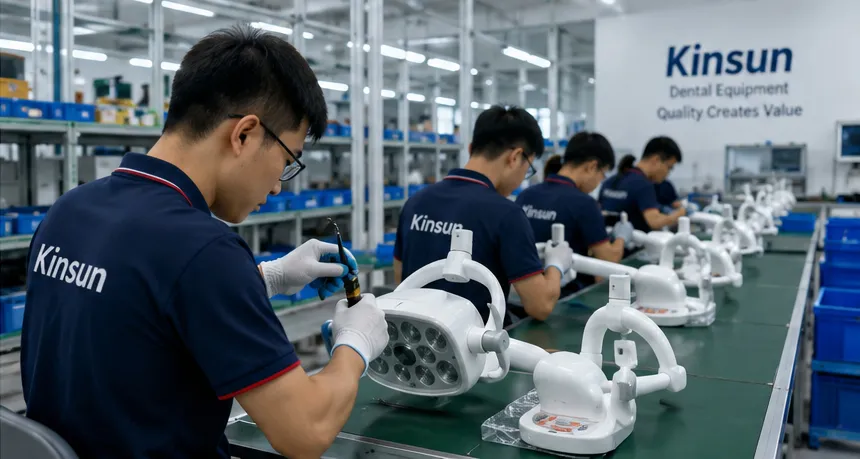
Key advantages of Kinsun dental chair lights include:
Natural daylight color temperature for accurate shade matching
Uniform light distribution with reduced shadows
Low heat output for improved patient comfort
Adjustable illumination for different clinical procedures
Long service life and low maintenance requirements
Compatible mounting options for various dental chair systems
OEM and customization services available for dental equipment manufacturers
Whether you are upgrading an older halogen dental light, replacing an existing operatory light, or developing a new dental chair project, Kinsun can provide reliable LED lighting solutions tailored to your requirements.
Our team supports distributors, dental equipment suppliers, and manufacturers with flexible cooperation models, stable product quality, and professional technical support.
If you are searching for a high-performance dental chair light that combines modern LED technology with competitive manufacturing advantages, Kinsun Dental can help you find the right solution.
Frequently Asked Questions
Yes. LED dental lights generally offer better energy efficiency, longer lifespan, lower heat generation, and superior color rendering.
Halogen technology requires more maintenance, consumes more energy, and generates more heat than LED systems.
Current research suggests that prolonged exposure to blue-rich light may require attention, but properly designed LED dental lights remain safe for clinical use.
Most experts recommend between 5,500K and 6,500K because it closely resembles natural daylight.
High-quality LED dental lights may operate for up to 50,000 hours.
For most clinics, upgrading improves visibility, reduces maintenance costs, and enhances patient comfort.
Conclusion
The debate between LED vs halogen dental light is becoming increasingly clear.
While halogen dental lights played an important role in dentistry for many years, LED technology has become the preferred choice for modern dental clinics.
LED dental lights provide:
- Longer lifespan
- Lower energy consumption
- Better color rendering
- Reduced heat
- Improved patient comfort
- Advanced cure-safe technology
- Lower maintenance costs
At the same time, recent research regarding blue light exposure reminds the industry that lighting quality matters.
Choosing a high-quality LED dental light with optimized spectral output, adjustable brightness, and proper eye protection measures can help dentists achieve both clinical excellence and occupational safety.
For dental clinics, equipment distributors, and dental chair manufacturers, LED dental lights represent not only an upgrade in technology but also an investment in efficiency, comfort, and long-term performance.