

A well-designed dental operatory needs more than a reliable dental chair and treatment unit. The seating used by the dentist and dental assistant also affects posture, working efficiency, patient access and long-term comfort. Although they may look similar at first glance, a dentist stool and a dental assistant stool are designed for different clinical roles.

This guide explains the main differences between a dentist stool and a dental assistant stool, including practical seat-height ranges, foot-ring requirements, back support, ergonomics and purchasing considerations. Whether you are equipping a dental clinic, sourcing products for distribution or planning an OEM dental stool project, choosing the right seating configuration can make daily chairside work more comfortable and productive.
Dentist Stool vs Dental Assistant Stool: Quick Comparison
| Feature | Dentist Stool | Dental Assistant Stool |
|---|---|---|
| Main User | Dentist, dental operator or specialist | Dental assistant, hygienist or chairside support staff |
| Primary Purpose | Provides stable, close access to the patient’s oral cavity during treatment | Supports suction, instrument transfer, patient assistance and four-handed dentistry |
| Typical Working Height | Usually lower or mid-height, depending on the dentist, patient-chair position and treatment style | Usually higher to improve access to instruments and the treatment area |
| Common Height Examples | Many dental stools offer approximately 550–750 mm of adjustment | High assistant models may offer approximately 620–820 mm; some models are around 584–737 mm |
| Foot Support | Often optional or less critical when both feet can rest on the floor | Usually requires a height-adjustable foot ring or foot pedestal |
| Support Design | Lumbar backrest, saddle seat, contoured seat or optional armrests | Torso support, backrest, body-support arm and adjustable foot ring are common |
| Best For | Precision treatment, examinations, restorations and clinical procedures | High-position chairside support, suction, instrument handling and assisting workflows |
In simple terms, the dentist stool is designed to help the operator work close to the patient with a stable and ergonomic posture. The dental assistant stool is generally designed for a higher seated position, allowing the assistant to reach the oral cavity, instrument tray and suction system efficiently without excessive bending or twisting.
What Is a Dentist Stool?
A dentist stool, also called a dental operator stool or doctor’s stool, is a mobile clinical seat used by dentists during examinations and treatment. Its main purpose is not simply to provide a place to sit. A properly selected dentist stool helps the operator maintain a balanced posture, move around the dental chair smoothly and keep a clear line of sight to the treatment area.
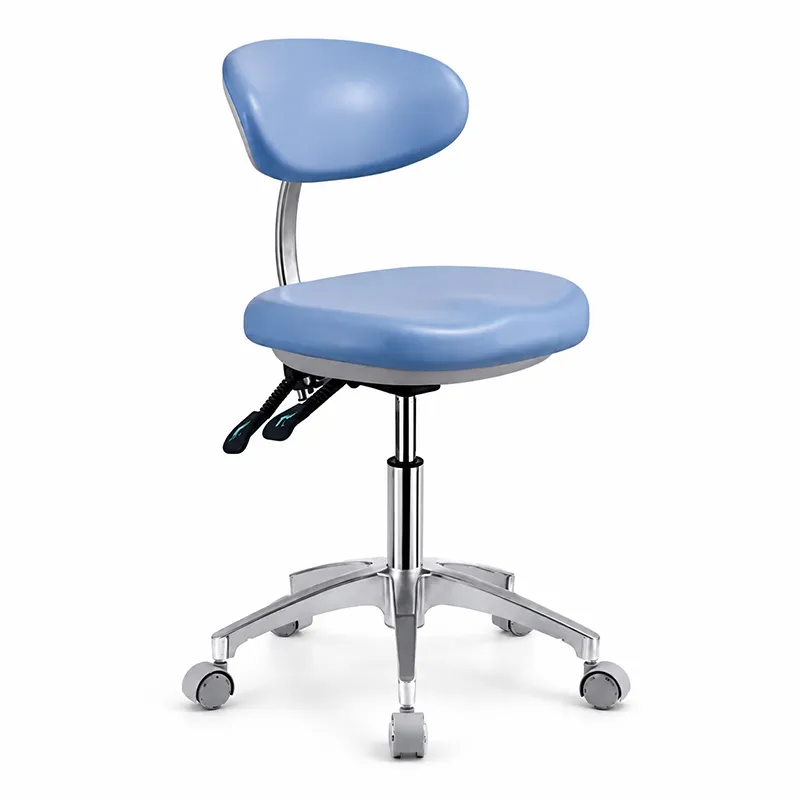
During dental procedures, the dentist often needs to sit close to the patient while keeping the shoulders relaxed and the elbows near the body. If the stool is too low, the dentist may lean forward excessively. If it is too high, the feet may lose stable contact with the floor, or the arms may be forced into an uncomfortable working angle. For this reason, height adjustment is one of the most important features of any professional dental stool.
Many dentist stools are available with a round seat, saddle seat, split saddle seat or contoured seat. A saddle-style dental stool can encourage a more open hip angle, while a conventional upholstered seat may be preferred by clinics that want a familiar sitting position. Some models include an adjustable lumbar backrest, a tilting seat or swing-out armrests for additional support during long procedures.
When selecting a dentist stool, the goal should be to create a natural operating posture rather than to choose the softest or lowest-priced seat. The dentist should be able to move close to the patient, keep the spine supported and adjust the seat height easily when switching between different procedures.
For a wider selection of configurations, visit our dental stool collection.
What Is a Dental Assistant Stool?
A dental assistant stool is designed for the support role beside the dental chair. During four-handed dentistry, the assistant may need to manage suction, prepare materials, transfer instruments, monitor the treatment field and assist with patient comfort. These tasks often require a slightly elevated position compared with the dentist’s operating position.
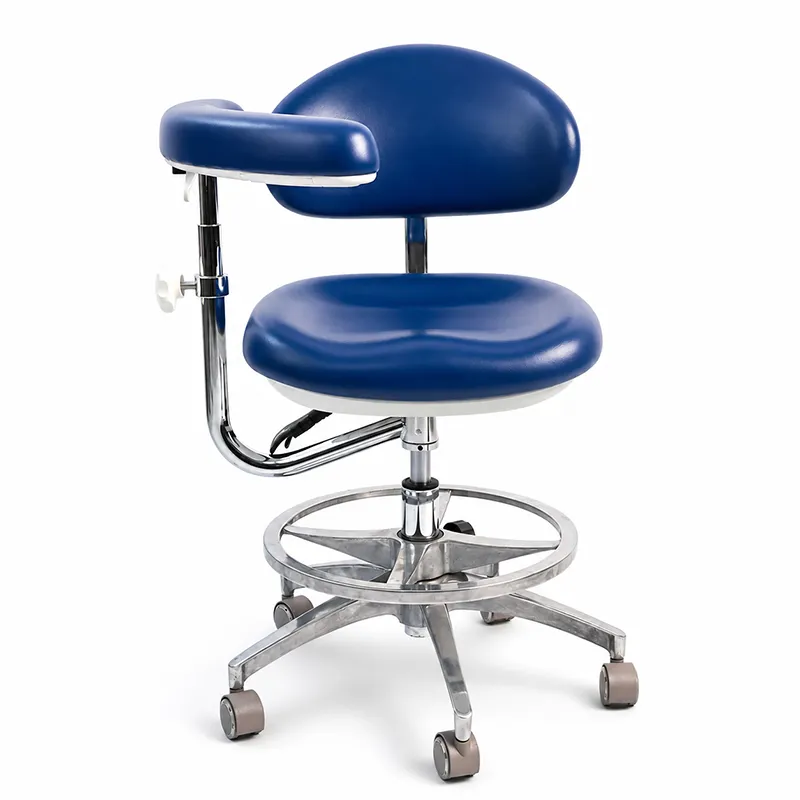
Because the assistant may sit higher, a dental assistant stool commonly includes a foot ring or foot pedestal. This is an important practical difference. When a seat is elevated and the user’s feet do not rest comfortably on the floor, a foot ring helps support the legs, stabilise the pelvis and reduce lower-body fatigue.
Many assistant stool designs also include a torso support, adjustable backrest or body-support arm. These features can help the assistant maintain balance while leaning toward the treatment area. Unlike a standard office chair, a dental assistant stool is expected to support frequent position changes in a compact clinical environment.
A dental assistant stool is therefore not just a taller dentist stool. It is a purpose-built seat for a different chairside workflow. For clinics using four-handed dentistry, matching the assistant stool to the dentist stool can improve coordination and help both team members maintain better working positions.
Real Dental Stool Height Ranges: What Should You Look For?
Dental stool height varies by product design, gas-lift cylinder, seat thickness and intended user. There is no single universal height that fits every dentist or assistant. However, real manufacturer specifications provide useful reference points for planning a clinic or evaluating a wholesale product range.
| Example Configuration | Approximate Seat-Height Range | Typical Use |
|---|---|---|
| Standard adjustable dental stool | 550–750 mm | General dentist or operator seating |
| High dental stool with support arm | 620–820 mm | Higher chairside assisting positions |
| Assistant stool example with foot ring | 23–29 in / approximately 584–737 mm | Dental assistant seating with elevated foot support |
| Short-cylinder stool option | Often selected for lower working positions | Shorter users or lower patient-chair setups |
| Tall-cylinder stool option | Often selected for taller users or higher work positions | Taller operators and elevated chairside workflows |
These figures should be treated as practical examples rather than fixed rules. A clinic should evaluate the user’s leg length, the operating height of the dental chair, the treatment style and the thickness of the seat cushion. A taller user may need a higher cylinder, while a shorter user may need a lower seat range to keep both feet stable.
A useful ergonomic principle is to position the hips slightly higher than the knees. This can help maintain a more natural spinal curve and reduce the tendency to lean forward. The correct setting should still allow the dentist or assistant to work close to the patient without raising the shoulders or overreaching.
Why Is a Dental Assistant Stool Usually Higher?
The higher seat position of a dental assistant stool is related to the assistant’s clinical role. The assistant often works at a different angle from the dentist and may need quick access to the oral cavity, saliva ejector, high-volume suction, handpieces and instrument tray. Sitting too low can force the assistant to bend forward, lift the shoulders or repeatedly stand up during treatment.
1. Better Access to the Treatment Area
A higher seated position can give the assistant a clearer view of the patient’s mouth and a more direct angle for suction and instrument transfer. This is especially useful when the patient chair is elevated for the operator’s working position.
2. More Efficient Four-Handed Dentistry
In four-handed dentistry, the dentist and assistant work as a coordinated team. The assistant needs enough height to receive and return instruments smoothly while avoiding unnecessary reaching. A dedicated dental assistant stool can support this workflow more effectively than a standard low operator stool.
3. Foot Support at Elevated Heights
When the seat is raised, the user may not be able to place both feet flat on the floor. A foot ring or foot pedestal provides a stable support point, helping reduce pressure on the thighs and improving seated balance. For this reason, a height-adjustable foot ring should be considered an essential feature rather than a decorative accessory.
4. Improved Mobility in a Compact Operatory
Dental assistants often need to reposition quickly. Smooth casters, a stable five-star base and easy-access adjustment levers help the assistant move around the treatment zone without interrupting the procedure.
Can a Dentist Use a Dental Assistant Stool?
A dentist can use a dental assistant stool temporarily, but it is not always the best long-term solution. Because assistant stools are often higher and include a foot ring or torso support, they may not provide the ideal working posture for a dentist who needs to position the legs close to the patient chair.
A high assistant stool may be suitable for a tall dentist, a high-chair operating style or selected specialist procedures. However, if the stool forces the dentist to sit too high, lean backward or lose floor contact, it can reduce stability and make precise treatment more difficult.
The better approach is to select a dentist stool with the correct cylinder height, adjustable seat tilt and suitable back support. Clinics should avoid buying one identical stool model for every team member simply for convenience. Different job roles often require different seating configurations.
Can a Dental Assistant Use a Dentist Stool?
A dental assistant can also use a dentist stool for short tasks, but a lower stool may not provide enough elevation for active chairside assisting. Without a foot ring, torso support or higher gas-lift range, the assistant may need to lean or stand repeatedly to reach the treatment field.
This is particularly important in busy clinics, where assistants spend many hours supporting procedures. A dedicated assistant stool may improve comfort, efficiency and workflow consistency over the long term.
How to Choose the Right Dental Stool for Your Team
Match the Height Range to the User and Dental Chair
Check the full adjustable seat-height range, not just the maximum height. Consider the user’s body proportions and the highest and lowest positions of the dental chair. A suitable stool should allow a natural posture across common treatment procedures.

Choose the Correct Foot Support
For dentist stools used at lower positions, stable floor contact may be enough. For dental assistant stools and higher work positions, choose a model with a strong, height-adjustable foot ring or foot pedestal.
Evaluate Backrest and Torso Support
Dentists may prefer lumbar support, a compact backrest or a saddle design that keeps the hips open. Assistants may benefit from a torso support or adjustable backrest that helps them remain stable while reaching toward the treatment field.
Consider Seat Shape and Cushion Material
Round, contoured and saddle seats each create different sitting experiences. The upholstery should be durable, easy to disinfect and suitable for daily clinical use. For distributors and OEM buyers, colour, upholstery material and stitching style can also be useful customization points.
Do Not Ignore Casters and Base Stability
A quality five-star base and smooth casters support safe movement around the operatory. The caster material should match the clinic floor, whether it is tile, vinyl, resin flooring or another hard surface. Learn more in our guide on how to choose the right caster for dental stools.
Dental Stool Buying Tips for Clinics, Distributors and OEM Buyers
For individual clinics, the priority is usually ergonomic fit and daily durability. A clinic should ideally provide separate dentist stools and dental assistant stools where four-handed dentistry is regularly used. This gives each team member the correct height range and support structure for their role.
For dental equipment distributors, a balanced product range should include standard doctor stools, high assistant stools, saddle stools, models with foot rings and models with adjustable backrests. Offering multiple gas-lift options can help distributors serve clinics with different chair configurations and user-height requirements.
For OEM buyers, customization may include logo printing, upholstery colour, seat style, foot-ring configuration, caster type, gas-lift height and packaging. These options can help build a differentiated dental furniture range for local markets.
Kinsun Dental supplies practical dental stool options for distributors, clinics, repair businesses and OEM buyers. We can help customers compare working height, seat structure, support features and customization options according to their market requirements.
Final Thoughts: Dentist Stool or Dental Assistant Stool?
The choice between a dentist stool and a dental assistant stool should be based on the user’s role, working height and clinical workflow. A dentist stool is generally designed for close, stable access to the patient during treatment. A dental assistant stool is usually higher and includes foot support to improve access during chairside assistance.
For the best operatory setup, do not treat these two products as interchangeable. Select seating that supports the actual working position of the dentist and assistant, then adjust it to the patient chair and daily treatment style. The right dental stool can improve comfort, movement and productivity throughout the working day.
Need help selecting the right model? Explore our dental stools for clinics and distributors or read our complete dental stool buying guide.
Frequently Asked Questions
A dentist stool is designed for the operator to work close to the patient during treatment. A dental assistant stool is usually higher and often includes a foot ring or torso support for chairside assisting, suction and instrument transfer.
The correct height depends on the assistant’s body proportions and the dental chair position. High assistant stool examples may range from approximately 620–820 mm, while other assistant models may offer a range around 584–737 mm.
In most elevated assistant-stool configurations, yes. A foot ring or foot pedestal provides stable support when the user’s feet cannot rest flat on the floor.
Yes, for temporary use, but a dedicated dentist stool is generally better for long-term operator ergonomics. The ideal stool should match the dentist’s working height and allow close access to the patient.
A saddle stool can be a good option for dentists who prefer an open hip angle and active sitting posture. However, the best choice depends on individual comfort, body proportions and the clinical working style.