

When choosing a dental stool, buyers often focus on the adjustment mechanism, backrest, casters or overall seat height. However, the dental stool cushion is the part that remains in direct contact with the operator throughout treatment. Its size, shape, internal foam, upholstery and underside construction can influence comfort, movement, cleaning and long-term durability.
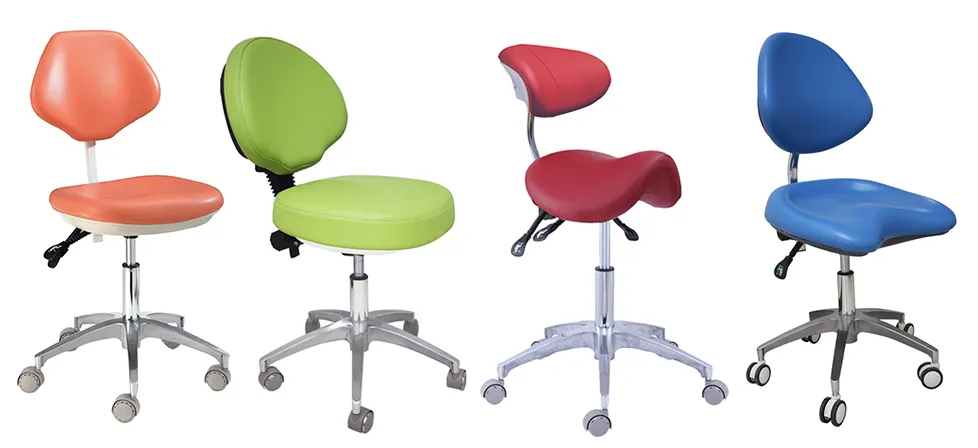
This guide explains how these components work together and how dental professionals and B2B buyers can choose a suitable cushion.
What Is Inside a Dental Stool Cushion?
Although a dental operator stool cushion may look simple from the outside, it normally contains several functional layers.
1. Upholstery
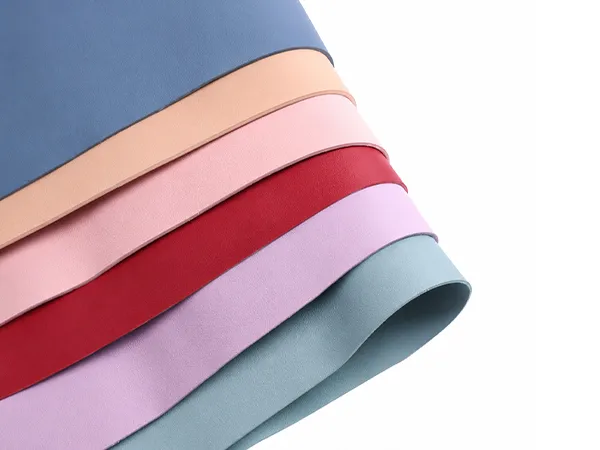
The outer upholstery forms the contact surface. It affects appearance, touch, friction, liquid resistance and cleaning convenience. Dental stool upholstery may include medical-grade PU leather or microfiber leather, while some very low-cost products use furniture-grade PU or PVC.
2. Foam cushioning
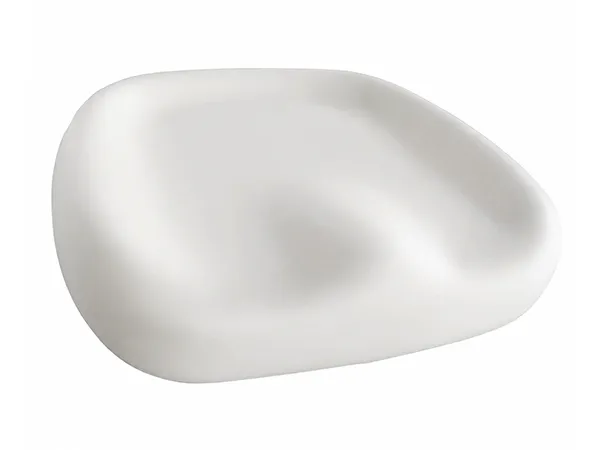
Foam absorbs and distributes the user’s weight. Its formulation, thickness, firmness and resilience determine how the cushion feels when first used and how well it maintains support over time.
3. Supporting seat base
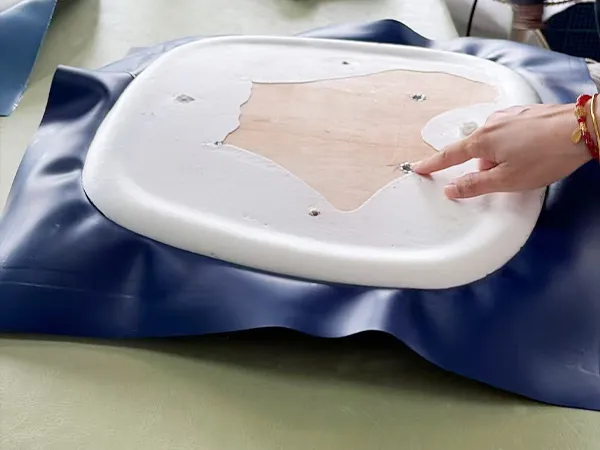
Underneath the foam is a rigid structure, which may be made from plywood, engineered board, plastic or metal-supported components. It stabilizes the cushion and connects it to the stool mechanism.
4. Underside covering
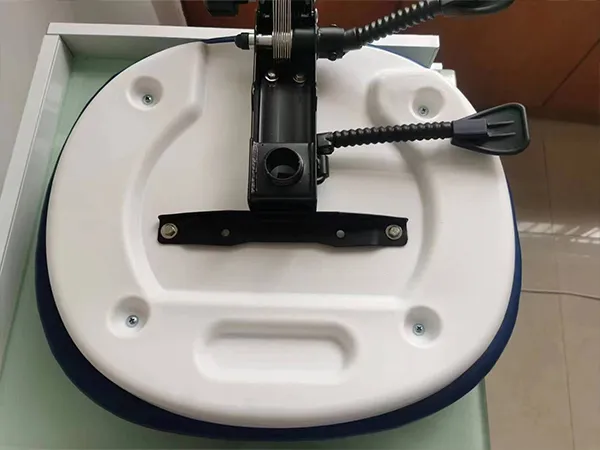
The bottom may be finished with a simple nonwoven fabric or enclosed by a molded plastic shell. This part is not normally visible while someone is sitting, but it affects appearance, cleaning, production cost and product positioning.
Each layer matters. A stool with attractive upholstery can still perform poorly if its internal foam deforms quickly. Likewise, good foam can be undermined by an upholstery material that cracks or cannot tolerate the clinic’s routine cleaning products.
Dental Stool Cushion Sizes: Is Bigger Always Better?
Dental stool cushions are available in compact, standard and wider formats. There is no universal cushion size that fits every dentist.
A larger seat provides a greater supporting area, which may be preferred by larger users or people who want more thigh and hip support. However, an oversized cushion can make it harder to open the legs, lean toward the patient or move close to the dental chair. Excessive seat depth may also create pressure behind the knees, especially for shorter users.
A smaller cushion leaves more space around the thighs and can support quick movement in a compact operatory. It may be easier for the dentist or hygienist to approach the patient from different working positions. The trade-off is that a very small seat may not provide adequate support for every body type.
When comparing dental stool seat sizes, look at more than the maximum external width. Buyers should also consider:
- Effective sitting area;
- Front-to-back seat depth;
- Cushion thickness;
- Position of the seat edges;
- Location and height of any contour;
- User body dimensions;
- Space required to approach the patient;
- Effect of cushion thickness on the final seat height.
Cushion thickness is particularly important because it contributes to the stool’s complete usable height range. The final seating height is determined by the cushion, gas lift, base and casters together. For more information, see our dental stool height guide.
Round vs. Square Dental Stool Cushions
The most common traditional designs use round, square or rounded-square seats. Each shape produces a different sitting and movement experience.
| Cushion shape | Possible advantages | Possible limitations |
|---|---|---|
| Round | Compact, easy to rotate on, no prominent corners and suitable for frequent changes in direction | May provide less thigh support, depending on diameter |
| Square or rounded-square | Larger usable supporting area and a clearer forward-facing position | An excessively wide or deep seat may interfere with movement |
| Saddle-shaped | Encourages a more open hip angle and may support a different working posture | Requires a different sitting technique and is not suitable for every user |
| Contoured traditional seat | Can stabilize the pelvis and distribute pressure across a shaped surface | A poorly matched contour may feel restrictive |
A round dental stool cushion is often used where compact dimensions and multidirectional movement are priorities. Because it does not have a strongly defined front or back, the user can rotate freely.
A square dental stool seat usually offers more surface area toward the sides and front. Rounded corners can reduce the bulky feeling of a conventional square cushion while retaining much of its supporting area.
Neither design is universally better. The choice depends on the operator’s body size, working position and personal preference. Buyers considering a saddle-shaped model can also read our comparison of a saddle stool vs. traditional dental stool.
Flat vs. Contoured Dental Stool Seats
Not every dental stool cushion is flat. Some seats incorporate depressions, raised sides or a gently curved front edge that follows the approximate shape of the buttocks and thighs.
A flat cushion allows the operator to change position without being guided toward one particular sitting point. This freedom can be useful for clinicians who lean, rotate and move frequently during procedures.
A contoured dental stool seat, by contrast, is designed to support the body through a three-dimensional surface. A suitable contour may help spread pressure and provide a more stable feeling around the pelvis.
Research involving seat-cushion pressure measurements has found that cushion contour can have a substantial effect on seat-interface pressure. In one study, contour affected pressure parameters more than sitting posture itself. The researchers also found relationships between average pressure, peak pressure and short-term comfort ratings. View the PubMed study.
Another study comparing a contoured seating base with a flat configuration found potential improvements in pressure distribution and discomfort. However, the outcome still depended on the interaction between the design and the user. Read the Eindhoven University of Technology research.
These findings do not mean that every curved cushion is better than every flat cushion. Contours that are too narrow, too deep or incorrectly positioned may restrict movement or place pressure in the wrong areas.
A good ergonomic dental stool cushion should fit the user instead of forcing the user to fit the cushion.
Why High-Resilience Foam Matters
The internal foam is one of the most important—and most easily overlooked—parts of a dental stool cushion. Buyers cannot accurately evaluate foam quality from product photographs alone.
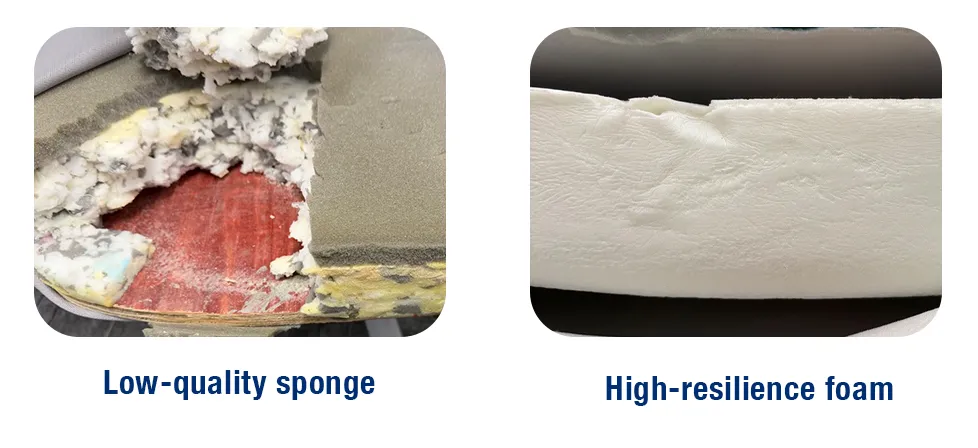
Initial softness is not the same as long-term support
A cushion may feel pleasantly soft during the first minute but compress too far during a long procedure. If the foam “bottoms out,” the user receives less support from the cushion and more pressure from the rigid seat base underneath.
Conversely, an extremely firm cushion may maintain its shape but create uncomfortable pressure points. The goal is not maximum softness or maximum hardness. It is an appropriate balance between surface comfort, support and recovery.
Density and firmness are different properties
Foam density measures mass per unit volume, while firmness describes the force required to compress the material by a specified amount. A high-density foam can be formulated to feel soft, and a low-density foam can initially feel firm.
The Polyurethane Foam Association explains that firmness is commonly evaluated using Indentation Force Deflection, or IFD. It also notes that density can affect durability and the foam’s ability to retain its original properties. Therefore, buyers should not assume that a “firm” cushion is automatically made from high-density material. See the PFA foam-performance guide.
Resilience and shape recovery
Resilience describes the foam’s ability to respond and recover after compression. It is commonly assessed through a ball-rebound test. Flexible polyurethane foams can have widely different rebound performance, so a generic description such as “sponge cushion” tells the buyer very little.
Kinsun dental stools use high-resilience foamed cushioning selected to provide both support and shape recovery. The objective is to help the cushion return toward its original form after the operator stands up, rather than leaving a persistent compressed area.
Molded foam vs. poorly controlled recycled filling
Recycled or rebonded foam is not automatically unsuitable. Properly engineered recycled material can be used in various products. The concern is poorly controlled filling made from mixed scraps without consistent density, firmness or fatigue testing.
Some low-cost dental stools may use this type of filling to reduce production costs. Possible problems include:
- Uneven firmness across the seat;
- Rapid loss of cushion thickness;
- Lumps or irregular supporting areas;
- Inconsistent feel between production batches;
- Early deformation under repeated loading.
Kinsun uses high-resilience foamed material rather than filling the seat with uncontrolled, low-quality recycled cotton or mixed foam scraps.
What should professional buyers ask?
When developing or comparing a high-resilience foam dental stool, B2B buyers can request information about:
- Foam type and production process;
- Density;
- IFD or ILD firmness;
- Ball-rebound resilience;
- Compression set;
- Fatigue performance;
- Thickness before and after loading;
- Batch-to-batch consistency;
- Tear and tensile performance where relevant.
Not every project needs the same numerical specification. However, defining measurable requirements is more reliable than relying only on descriptions such as “premium foam” or “extra soft.”
Upholstery for Dental Stool Cushions
Kinsun offers medical-grade leather and microfiber leather options for dental stool cushions.
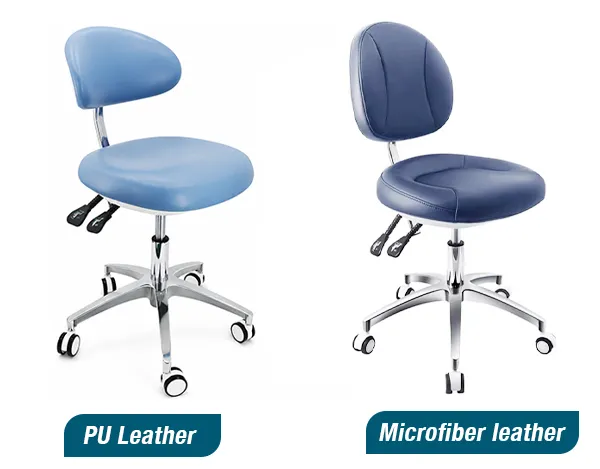
Medical-grade PU can provide a smooth, easy-to-wipe surface. Depending on the cushion design and production method, some PU-covered seats can be manufactured with few or no exposed seams on the sitting surface. Reducing unnecessary grooves and stitching can make routine cleaning more convenient.
Microfiber leather offers a different surface feel and can provide good comfort, breathability and long-term durability. Because of its production and fitting process, a microfiber dental stool cushion may require stitched seams. These seams can enhance the product’s appearance, although they require more attention during cleaning.
Very low-priced stools may use furniture-grade PU or PVC that was not selected for frequent use with clinical cleaning products. The word “PU” alone does not prove that a material is medical grade. Buyers should ask about abrasion resistance, liquid resistance, seam design and compatibility with the disinfectants used in their target market.
For a more detailed comparison, read our guide to dental stool upholstery materials.
Regardless of the upholstery selected, clinics should follow the material manufacturer’s cleaning instructions. Using an incompatible chemical or leaving a surface excessively wet may shorten the life of the covering.
Why the Underside of the Cushion Matters
Turn a dental stool upside down and the difference between an entry-level and a premium product can become more obvious.

Nonwoven fabric underside
A conventional dental stool may use a layer of nonwoven fabric to cover the bottom of the cushion. This construction is economical, lightweight and adequate for hiding the internal board and upholstery edges.
Its limitations are mainly related to finish and maintenance. A fibrous surface may collect dust more easily, is less convenient to wipe and does not create the same complete appearance as a molded enclosure.
For price-sensitive projects, however, a well-assembled nonwoven underside remains a practical option.
Molded plastic underside cover
Premium dental stools may use a plastic bottom shell. The shell covers upholstery edges, fasteners and parts of the supporting structure, giving the cushion a cleaner and more finished appearance.
A smooth plastic cover is generally easier to wipe than exposed nonwoven fabric. This is useful in a clinical environment where surface design and access can affect cleaning convenience. CDC guidance explains that dental-operatory surfaces can become contaminated by touch, splash or droplets and that the nature of the surface should be considered when selecting cleaning methods. See the CDC environmental-surface recommendations.
A plastic underside increases material, tooling and assembly costs, so it is more commonly used for mid-range and high-end product lines.
Kinsun can provide both economical nonwoven underside construction and molded plastic underside covers. Distributors can therefore balance appearance, cleanability and target price instead of using the same configuration for every market segment.
For practical care instructions, visit our guide on how to clean and maintain a dental stool.
How Dentists and Hygienists Should Choose a Cushion
Technical data helps narrow down the options, but the final decision should include a real sitting test. A cushion that fits one dentist perfectly may be uncomfortable for another.
Use the following evaluation process:
- Adjust the stool to the normal working height.
Testing at an unsuitable height can make a good cushion feel uncomfortable. Keep the feet stable and position the patient chair as it would be during treatment. - Sit in a realistic operating posture.
Do not evaluate the cushion only while sitting upright in a showroom. Lean toward the simulated oral cavity, reach for instruments and rotate toward the assistant or instrument tray. - Check the front edge.
Make sure the cushion does not create concentrated pressure behind the thighs or knees. - Observe pelvic stability.
A curved cushion should provide guidance without locking the pelvis into an uncomfortable position. - Test freedom of movement.
Open the legs, rotate, move the stool and approach the patient chair from the working positions normally used. - Remain seated for at least 10–15 minutes.
This is a practical showroom test rather than a medical standard, but it can reveal pressure, sliding or numbness that may not be apparent during the first minute. - Compare different shapes and firmness levels.
If possible, test a compact round cushion, a wider traditional cushion and a contoured seat under similar conditions.
The best dental stool cushion is ultimately the one that supports the individual operator’s body and clinical workflow. Measurements and material specifications are valuable, but they cannot completely replace real user feedback.
For a broader assessment of backrests, adjustment systems, casters and working posture, see how to choose the best dental stool.
How Distributors Should Select Cushions for Their Markets
A distributor has a different decision to make. Instead of choosing one cushion for one dentist, the distributor must identify configurations that suit a broader local customer base.
Start by collecting structured feedback from dentists, hygienists and assistants. Ask testers to comment separately on seat size, front-edge pressure, foam firmness, stability, freedom of movement and surface feel.
The selection process can include:
- Identifying the body-size range of target users;
- Comparing preferences for round and square cushions;
- Testing flat and contoured seat designs;
- Separating economical and premium product lines;
- Selecting medical-grade PU or microfiber upholstery;
- Choosing upholstery colors suitable for local dental clinics;
- Comparing nonwoven and plastic-covered undersides;
- Conducting small-batch market tests before a large order;
- Recording complaints and repeat-purchase feedback;
- Adjusting foam feel or cushion dimensions for later batches.
Kinsun can work with dental distributors and OEM customers to develop a custom dental stool cushion for different markets. Available customization can include cushion dimensions, external shape, contour, foam feel, upholstery material, color, stitching and underside construction.
This makes it possible to create an economical model for price-sensitive customers, a comfortable general-purpose stool for clinics and a more refined premium model with a plastic underside shell—all without assuming that one seat design will satisfy every user.
Dental Stool Cushion Buyer’s Checklist
Before confirming an order, use this checklist to compare quotations and samples.
| Item to check | Why it matters |
|---|---|
| Overall width and depth | Affects body fit, mobility and clinic space |
| Effective sitting area | Shows how much usable support the cushion provides |
| Cushion thickness | Influences feel and final stool height |
| Round, square or saddle shape | Affects movement, support and working posture |
| Flat or contoured profile | Influences pressure distribution and pelvic stability |
| Foam type | Helps identify the intended support and production method |
| Density and firmness | Makes sample and batch comparison more objective |
| Recovery and fatigue performance | Indicates how well the cushion may retain its shape |
| Upholstery grade | Affects cleaning compatibility, appearance and durability |
| Number and position of seams | Influences design and cleaning convenience |
| Underside construction | Affects price, finish and ease of wiping |
| Mounting structure | Important when ordering a replacement cushion |
| Customization options | Helps distributors serve different market segments |
Work with Kinsun to Develop the Right Dental Stool
There is no single cushion size, shape or firmness that can be described as the best choice for every dentist.
For individual clinicians, the most reliable method is to sit on the stool and simulate normal clinical movements. A suitable cushion should support the body without restricting access to the patient or creating excessive pressure around the thighs and pelvis.
For distributors, the goal is to understand local preferences and create a product combination that fits the market. Cushion size, foam feel, upholstery and underside design can be adjusted to match different price levels and customer expectations.
Kinsun supplies dental stools for dentists, hygienists and assistants and supports customized cushion configurations for B2B projects. Contact Kinsun to discuss your target users, preferred style, price range and customization requirements.
Frequently Asked Questions
High-resilience polyurethane foam is a practical option because it can combine support with shape recovery. However, the word “high-resilience” should not be the only selection criterion. Density, firmness, compression set, fatigue performance and consistency should also be considered.
A suitable contour may improve pressure distribution and pelvic stability, but it must fit the user. A contour that is too narrow or deep can restrict movement. Dentists should test both contoured and flat seats in realistic working positions.
It should be firm enough to prevent excessive compression but comfortable enough to avoid concentrated pressure. A very soft cushion may feel comfortable initially but provide insufficient support during longer procedures.
Neither shape is universally more comfortable. Round seats are compact and easy to rotate on, while square or rounded-square seats may offer a larger supporting area. Body dimensions and working style should guide the choice.
Yes. Kinsun can discuss customization of cushion dimensions, shape, contour, foam feel, upholstery, color, stitching and underside construction. Available options may depend on order quantity, tooling requirements and project specifications.
In some cases, yes, but cushions are not universally interchangeable. The mounting-hole spacing, supporting plate, adjustment mechanism, seat orientation and load-bearing structure must match. Buyers should provide measurements, photographs or a physical sample before ordering a dental stool replacement cushion.