

Dental professionals can spend many hours each day in seated working positions. Whether you are performing examinations, scaling, restorative treatment, or assisting during procedures, your stool affects how easily you can reach the patient, maintain visibility, and reduce unnecessary strain on your body.
When choosing a clinician chair, one question appears frequently: saddle stool vs traditional dental stool—which one is better?
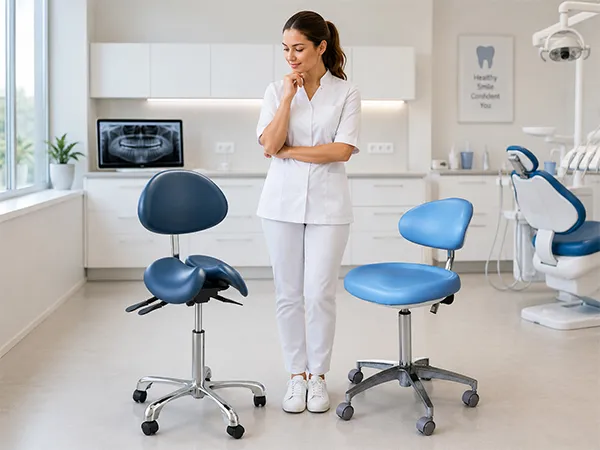
The short answer is that neither style is automatically right for every dental professional. A saddle stool can help many users sit higher, open the hip angle, and move closer to the patient. A traditional dental stool may feel more familiar and provide stronger back support for users who prefer a conventional seated posture.
The best choice depends on your body type, working habits, operatory layout, patient chair position, and the level of adjustment available on the stool itself.
If you are comparing models for a clinic, distributor project, or dental equipment business, explore Kinsun’s range of dental stools before making a final decision.
Saddle Stool vs Traditional Dental Stool: A Quick Comparison
| Feature | Saddle Stool | Traditional Dental Stool |
|---|---|---|
| Seat shape | Saddle-shaped, often split or contoured | Flat, round, or lightly contoured seat |
| Hip position | More open hip angle | Often closer to a 90-degree sitting angle |
| Working posture | Similar to supported standing | Conventional seated posture |
| Distance to patient | Usually easier to sit close to the patient | May require more forward reach in some setups |
| Mobility | Flexible for frequent position changes | Stable and familiar for many users |
| Back support | May have optional backrest | Often includes a more prominent backrest |
| Learning curve | Requires posture adjustment and adaptation | Usually easier to use immediately |
| Best for | Active operators who change position often | Users who prefer familiar seated support |
A saddle stool is not simply a traditional stool with a different cushion. Its seat design changes the relationship between the pelvis, thighs, knees, feet, and spine. That difference can influence how an operator works around the dental chair.
What Is a Traditional Dental Stool?
A traditional dental stool usually features a flat or gently shaped seat cushion, a gas-lift height adjustment system, a five-star rolling base, and sometimes a backrest or lumbar support. It is the type of chair many dentists, assistants, and hygienists first learn to use in dental school or clinical practice.
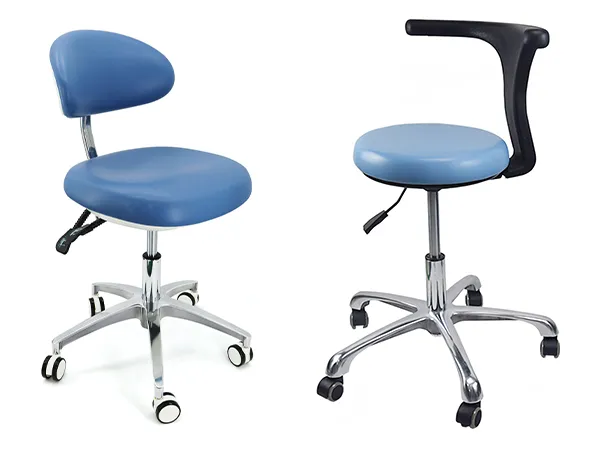
With a standard stool, the user often sits with the thighs closer to horizontal and the knees bent at approximately 90 degrees. This position can feel comfortable and stable, especially for operators who are accustomed to standard office chairs.
Traditional stools still offer important benefits:
- Easy for new users to understand and adjust
- Available in many seat widths and cushion designs
- Often provide reliable backrest support
- Suitable for general procedures and shared clinic spaces
- Can be cost-effective for multi-chair clinic projects
- Available with adjustable seat tilt, armrests, and foot rings
A well-designed traditional stool should not be considered an outdated option. When it has the correct height range, a supportive cushion, stable base, and properly positioned backrest, it can be a practical choice for many dental professionals.
However, a standard stool may make it more difficult for some users to sit close to the patient without leaning forward. If the seat is too low, the hips may drop below the knees, which can encourage a more rounded lower-back posture.
What Is a Saddle Stool?
A saddle stool uses a seat shaped like a horse saddle. Instead of keeping both thighs straight in front of the body, the saddle design allows the legs to move downward and outward. This places the operator in a position between standing and sitting.
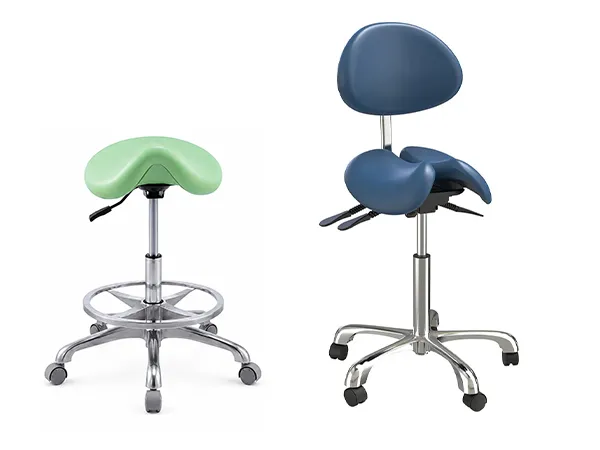
Many dental saddle stools are designed to encourage a more open angle between the torso and thighs. Depending on the model and adjustment, this angle may be noticeably greater than the more closed angle found on a conventional stool.
For dental professionals, this design can create several practical advantages:
- Easier access to the patient chair
- Less need to reach forward from the waist
- More freedom to move around the patient
- A higher working position without excessive knee elevation
- Better ability to keep both feet on the floor
- Potentially more natural pelvic positioning for some users
Research comparing saddle and conventional seating in dentistry suggests that saddle seats may reduce ergonomic risk in the examined clinical settings, although the available evidence remains limited. In real practice, the stool alone is only one part of an ergonomic setup. Patient chair height, dental light position, instrument placement, magnification, and operator technique all matter.
How Does a Saddle Stool Affect Working Posture?
The main purpose of a saddle stool is to help the user sit with a more open hip angle. When the hips are positioned slightly higher than the knees, the pelvis may be easier to maintain in a more neutral orientation.
This can be helpful for dental operators because dental work often requires close access to the oral cavity. If an operator cannot get close enough to the patient, they may compensate by leaning forward, twisting the torso, raising the shoulders, or extending the neck.
A saddle stool may make it easier to reduce these unnecessary movements by allowing the thighs to slope downward rather than extending horizontally in front of the body.
However, correct adjustment is essential. A saddle stool that is too low, too high, too narrow, too wide, or tilted too far forward can create new discomfort rather than solve an existing problem.
The goal is not to force the body into a posture that feels unnatural. The goal is to create a stable, balanced working position that supports efficient movement.
Saddle Stool vs Traditional Dental Stool: Key Differences
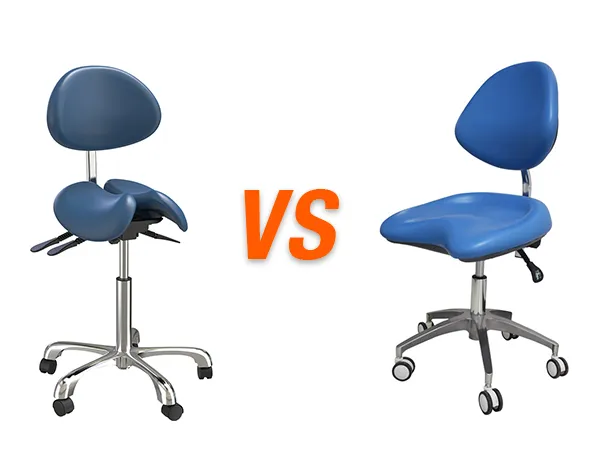
1. Hip Angle and Pelvic Position
Traditional dental stools often position the operator with a relatively closed hip angle. This may feel familiar, but prolonged sitting in this position can make it easier to roll the pelvis backward and flatten the natural curve of the lower back.
A saddle stool typically opens the hip angle because the thighs point downward. For many users, this makes it easier to sit with the pelvis in a more neutral position.
That said, the ideal posture is not identical for everyone. Body proportions, flexibility, previous injuries, and the height of the dental chair all affect the final setup.
2. Distance to the Patient
One of the strongest advantages of a saddle stool is that it can help an operator get closer to the patient chair. With the legs positioned lower and more freely, there is often less interference between the operator’s thighs and the dental unit.
This can reduce the temptation to reach forward from the shoulders or bend from the waist.
Traditional stools can also allow close patient access, especially when they have a compact seat and adjustable tilt. But some designs require the user to sit farther back, particularly when the seat is wide or the patient chair is positioned low.
3. Mobility Around the Operatory
Dental professionals frequently move between clock positions, instrument zones, and patient sides. A saddle stool can support this dynamic workflow because the user can shift direction with relatively free leg movement.
Traditional stools are also mobile when fitted with suitable casters, but their seating position may feel less active for operators who move frequently during treatment.
The type of wheels also matters. If your clinic has smooth flooring, hard casters may move easily. For softer or uneven surfaces, wheel material and diameter should be selected carefully. You can also read Kinsun’s guide on how to choose the right caster for dental stools when evaluating stool mobility.
4. Backrest Support
Traditional stools often provide more obvious back support. For users who prefer a backrest during longer consultations, charting, or less active tasks, this can be an important advantage.
Saddle stools may include a small lumbar support, but many users rely more on their own core stability and active posture. This can feel beneficial for some operators, but it may also require an adaptation period.
A user who has always worked with a large backrest may initially find a saddle stool unfamiliar. This is normal. It is better to adjust gradually rather than switching immediately to full-day saddle seating.
5. Pressure and Comfort
Comfort is highly individual. Some people find a saddle seat more comfortable because it reduces pressure on the lower back and allows better leg positioning. Others may experience pressure in the inner thighs, hips, or pelvic area if the seat shape does not fit their body.
The width and contour of the saddle are especially important. A seat that is too wide may force the hips apart too much. A seat that is too narrow may create uncomfortable pressure and reduce stability.
This is why a saddle stool should never be selected based only on appearance or price. Fit, height range, upholstery, padding, and adjustment options are all important.
One-Piece vs Split Saddle Stool
Dental saddle stools are commonly available in two main seat styles: one-piece and split saddle designs.
One-Piece Saddle Stool
A one-piece saddle stool has a continuous seat surface. It often provides a stable and supportive feel, especially for users who prefer a more traditional cushion structure.

Potential benefits include:
- Smooth and simple seat design
- Consistent support across the seat
- Easy appearance for clinic interiors
- Suitable for operators who prefer a unified cushion
However, some users may find that a one-piece saddle creates more pressure in the front of the seat, particularly during long procedures.
Split Saddle Stool
A split saddle stool has two separate seat sections with an opening in the center. This design can reduce pressure in sensitive areas and may offer more flexibility for certain body shapes.

Potential benefits include:
- Reduced central pressure for some users
- Easier individual fit for certain operators
- More room for natural leg positioning
- A popular option for users who find standard saddle seats too restrictive
A split saddle is not automatically better than a one-piece design. The correct choice depends on personal comfort, body proportions, and work duration. For clinics purchasing multiple stools, offering both styles can help accommodate different users.
Who May Benefit Most From a Saddle Stool?
A saddle stool can be particularly useful for dental professionals who want a more active seating position.
It may be a good option for:
- Dentists who frequently change working positions
- Dental hygienists performing long scaling or preventive care sessions
- Operators who need to move close to the patient chair
- Users who prefer to sit higher while keeping their feet stable on the floor
- Clinics focused on improving ergonomic equipment
- Professionals using loupes or other magnification systems
- Operators who find themselves repeatedly leaning forward from a standard stool
For dental hygienists, the ability to move close to the patient without excessive forward reach can be especially valuable. If you are targeting this type of seating, see our guide to the best saddle chair for dental hygienists.
When Is a Traditional Dental Stool the Better Choice?
Traditional dental stools remain a sensible option in many situations.
A conventional stool may be better if:
- You strongly prefer a familiar, standard seated posture
- You need more noticeable lumbar or backrest support
- You use the stool for both clinical work and administrative tasks
- You are not comfortable sitting with the legs more widely positioned
- You have limited operatory space and need a compact, conventional design
- You are purchasing stools for multiple users with different preferences
- You want a lower-cost stool for general clinic use
Traditional stools can also work well when they include key ergonomic features, such as adjustable height, a slight forward seat tilt, a compact seat profile, and a properly positioned backrest.
The choice should be based on function rather than trend. A saddle stool may be popular, but a traditional stool that fits the operator correctly can still support productive and comfortable daily work.
How to Sit Properly on a Saddle Stool
Buying a saddle stool is only the first step. The way it is adjusted will determine whether it supports or disrupts your working posture.

Follow these basic setup steps:
1. Adjust the Stool Height
Start by sitting high enough that your hips are slightly higher than your knees. Your feet should remain stable on the floor rather than resting on the base or wheels.
If the stool is too low, your hips may close and your lower back may round. If it is too high, your feet may lose stable contact with the floor.
2. Sit Toward the Rear of the Seat
Position your pelvis on the wider rear section of the saddle rather than balancing only on the front edge. This improves stability and helps distribute body weight more evenly.
3. Keep Both Feet Supported
Keep both feet flat and stable. Avoid crossing your legs or placing your feet on the stool base. Your body should form a stable three-point support system: the seat and both feet.
4. Use a Small Amount of Forward Tilt
If your saddle stool has tilt adjustment, a slight forward tilt may help open the hip angle. Avoid excessive tilt, because it can make you feel as if you are sliding forward.
5. Move Close to the Patient
Use the stool’s design to get closer to the patient. Do not replace one poor habit with another by leaning forward from the neck and shoulders.
6. Change Position During the Day
Even an ergonomic stool should not keep you in one fixed position for hours. Alternate sitting positions, stand briefly between patients, and adjust the patient chair when necessary.
For long-term performance, regular cleaning and inspection are also important. Read our practical guide on how to clean and maintain a dental stool to help extend the service life of upholstery, casters, gas lifts, and adjustment mechanisms.
How to Choose the Right Dental Stool
Whether you choose a saddle stool or a traditional dental stool, consider the following factors before purchasing.
Height Adjustment Range
The stool must match the height of the operator and the dental chair. Shorter and taller users may require different gas lift cylinders or foot ring options.
Seat Width and Shape
A saddle should fit the user’s pelvis without creating excessive pressure. A traditional stool should provide enough support without being so wide that it prevents close access to the patient.
Backrest and Armrest Options
Some operators benefit from a compact lumbar support, while others prefer an unobstructed stool for greater freedom of movement. Armrests can support the forearms in some workflows, but they should not block access to the patient.
Upholstery Material
Dental stools should use durable, easy-to-clean upholstery suitable for clinical environments. Smooth PU surfaces are widely used because they are practical for daily cleaning. know more about dental stool seat materials.
Base and Casters
A five-star base supports stability. Casters should match the floor type and allow controlled movement without excessive resistance or uncontrolled rolling.
Customization Requirements
For distributors, clinic groups, and OEM buyers, consider color options, logo customization, packaging, seat material, wheel type, and bulk supply consistency.
Consider Kinsun Dental Stools
Kinsun Dental supplies practical dental stool options for distributors, clinics, repair service providers, and OEM buyers. Whether you need a traditional dental stool, a saddle-style operator stool, replacement casters, or customized color and branding options, selecting the correct configuration is important for both user comfort and product positioning.
For wholesale or clinic projects, it is useful to compare seat style, height range, upholstery, base structure, wheel type, and packaging requirements before placing an order. A good dental stool should fit the user, the treatment room, and the daily workflow—not simply follow a standard specification.
Browse Kinsun’s dental stool collection or contact the sales team to discuss suitable options for your market.
Frequently Asked Questions
Not always. Saddle stools can help many dental professionals maintain a more open hip angle, sit closer to the patient, and move more freely around the dental chair. However, traditional dental stools may be more suitable for users who prefer stronger backrest support or a familiar seated posture. The best choice depends on body type, clinical workflow, and correct stool adjustment.
A saddle stool can be a practical choice for dental hygienists because it may make it easier to move close to the patient and change working positions during scaling or preventive care. However, the saddle width, seat height, padding, and tilt must fit the individual user. A poorly fitted saddle stool can cause discomfort rather than improve posture.
Neither design is universally better. A split saddle stool may reduce central pressure and give some users more comfortable leg positioning. A one-piece saddle stool can provide a more continuous and stable seating surface. The right option depends on personal comfort, body proportions, and the length of daily clinical procedures.
In general, the stool should be adjusted so that your hips are slightly higher than your knees while both feet remain firmly supported on the floor. This position can help create a more open hip angle and make it easier to work close to the patient. The final height should also match the patient chair position and your own body proportions.
Yes. A traditional dental stool can be ergonomic when it has an appropriate height range, stable five-star base, suitable seat width, easy-rolling casters, and adjustable backrest or seat tilt. Correct patient positioning, instrument placement, lighting, and regular posture changes are equally important.
The adaptation period varies. Some dental professionals feel comfortable after several days, while others may need several weeks of gradual use. It is usually better to begin with short procedures or part of the working day, then increase usage as your body adapts. If persistent discomfort occurs, review the stool’s height, tilt, width, and overall fit.
Conclusion: Which Dental Stool Should You Choose?
In the comparison of saddle stool vs traditional dental stool, the best answer depends on the operator.
A saddle stool may be a strong choice for dental professionals who want a higher, more active seating position, easier patient access, and a more open hip angle. It can be especially useful for dentists and hygienists who frequently adjust their position throughout the day.
A traditional dental stool remains a reliable choice for users who prefer familiar seating, stronger back support, and simple day-to-day comfort.
The most important factor is not whether the stool looks modern or traditional. It is whether the stool can be adjusted to support stable feet, balanced hips, relaxed shoulders, close patient access, and efficient clinical movement.