

A dental stool may look like a simple piece of clinic furniture, but every component can affect the comfort and efficiency of the dental professional using it. While buyers often focus on the seat cushion, backrest and height adjustment, the casters underneath the stool are just as important.
The right dental stool casters allow dentists and assistants to move smoothly between the patient, instrument tray and dental equipment. They can also help reduce noise, protect clinic flooring and keep the stool stable during daily use.
Whether you are setting up a new clinic, replacing an old stool or purchasing dental stools for distribution, the following factors can help you choose suitable casters for your application.
Why Dental Stool Casters Matter
Dentists and dental assistants frequently change position during examinations and treatments. A stool that rolls smoothly makes these short movements easier and can reduce the need to twist, stretch or repeatedly stand up.
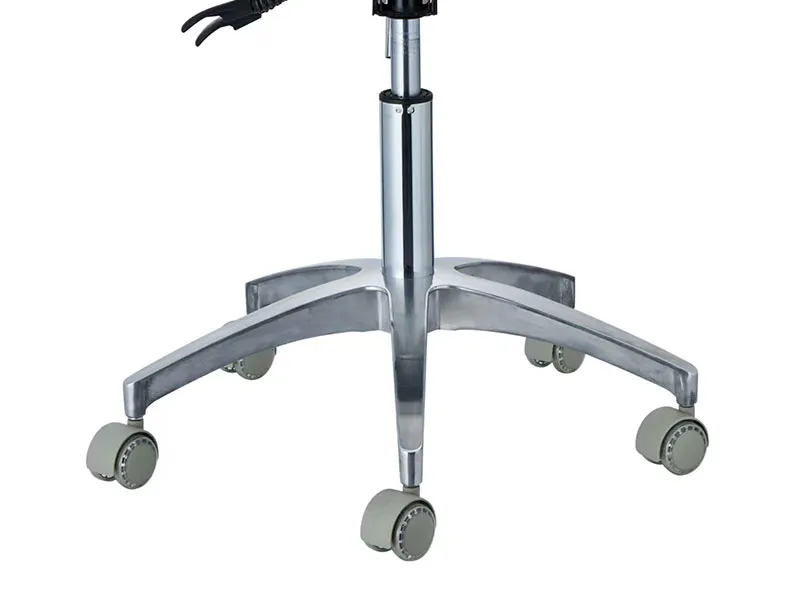
Poor-quality or unsuitable dental stool wheels may create several problems:
- The stool may be difficult to move while someone is sitting on it.
- Hard wheels may make noticeable noise on tile or vinyl flooring.
- Some wheel materials can leave marks or scratches.
- Worn casters may cause the stool to wobble.
- Hair, dust and other debris may collect around the wheel axle.
- Casters that do not swivel correctly may interrupt natural movement.
For these reasons, casters should be considered when evaluating the overall quality and usability of a dental stool.
1. Choose the Right Caster Material
Wheel material affects noise, grip, rolling resistance, floor protection and durability. The most common options for dental stools include polyurethane, rubber, TPR and nylon.
Polyurethane Casters
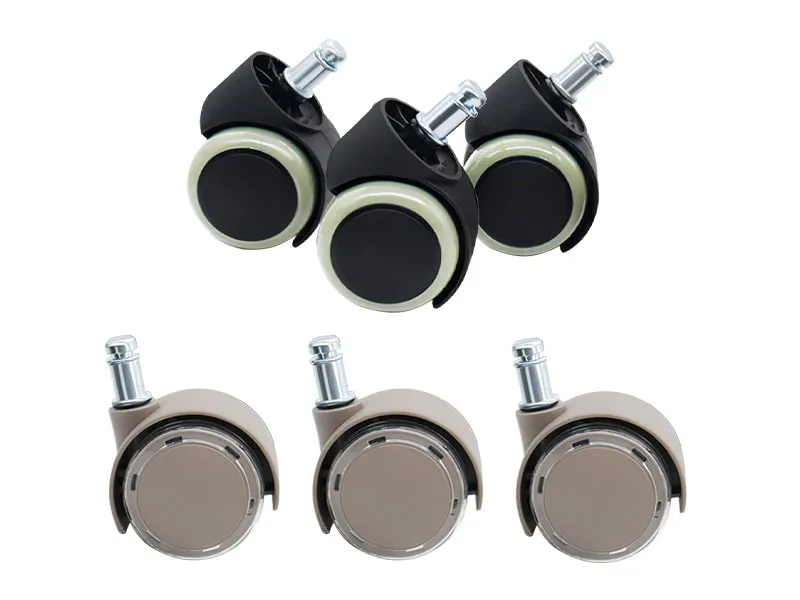
Polyurethane, commonly called PU, is a practical choice for many dental clinics. PU dental stool casters generally provide a good balance between durability and quiet operation.
They can roll smoothly on common clinic surfaces such as:
- Ceramic tile
- Vinyl or PVC flooring
- Epoxy flooring
- Laminate flooring
- Sealed wood flooring
PU wheels are usually softer than nylon wheels, so they are less likely to produce harsh rolling noise or leave marks on hard floors. Their wear resistance also makes them suitable for frequently used dentist and assistant stools.
Nylon Casters
Nylon wheels are strong, durable and relatively easy to clean. They can roll well on carpet and are sometimes used in busy commercial environments.
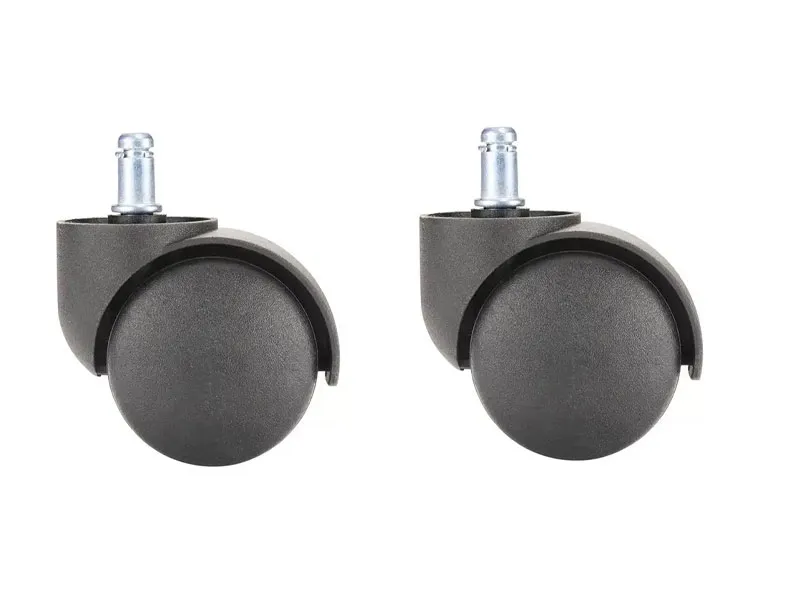
However, nylon is harder than PU or TPR. On tile, wood or other hard surfaces, nylon wheels may create more noise and may provide less cushioning. They should therefore be selected according to the clinic’s flooring and operating requirements.
A simple comparison can help:
| Caster material | Main advantages | Recommended application |
|---|---|---|
| Polyurethane | Durable, quiet and floor-friendly | Most dental clinics |
| Nylon | Strong, wear-resistant and easy to clean | Carpet or suitable commercial floors |
For most dental treatment rooms with hard flooring, PU or high-quality TPR casters are often practical choices.
2. Match the Casters to the Clinic Floor
The floor type should be considered before choosing dental stool wheels. A caster that performs well on carpet may feel noisy or too hard on ceramic tile.
For tile, vinyl, PVC, epoxy and laminate floors, soft and non-marking wheels are generally preferred. PU and TPR casters can help reduce rolling noise and protect the surface from unnecessary marks.
For low-pile carpet, a slightly harder or larger wheel may roll more easily. Very soft wheels can create excessive resistance on carpet, making it difficult for the user to reposition the stool.
The condition of the floor also matters. If the treatment room has joints, small gaps or slightly uneven areas, a larger wheel diameter may pass over these obstacles more easily than a very small wheel. However, changing the wheel diameter can also change the stool’s seat height, so the complete stool design must be considered.
3. Check Rolling Smoothness and Noise
A dental clinic should feel calm and professional. Squeaking, rattling or rough-moving stool wheels can be distracting to both patients and dental staff.
Good dental stool casters should:
- Start rolling without excessive effort.
- Swivel easily in different directions.
- Move without noticeable rattling or squeaking.
- Remain smooth when the stool is supporting a person.
- Avoid suddenly locking or changing direction.
- Roll consistently across all five wheels.
Whenever possible, test the stool under normal working conditions. A caster may spin freely when the stool is empty but behave differently when supporting the combined weight of the stool and its user.
All casters should also provide a similar level of rolling resistance. If one wheel is significantly tighter than the others, the stool may feel uneven or pull toward one side.
4. Consider Stability and Load Capacity
Smooth movement is important, but it should not come at the expense of stability. Dental stool casters must support the weight of both the stool and its user during repeated daily movement.

A well-designed five-star base helps distribute the load and gives the stool support in different directions. However, the base and casters must work together. Weak wheels, loose fittings or an unsuitable caster height can make even a wide stool base feel unstable.
When comparing dental stools, consider:
- The recommended maximum load
- The number and position of the casters
- The width of the stool base
- The strength of the caster mounting points
- The stability of the stool when changing direction
- The performance of the casters under actual load
For distributors or bulk buyers, it is advisable to ask the supplier about the recommended load range and perform a sample test before placing a large order.
5. Decide Whether Brakes Are Necessary
Not every dental stool requires braked casters.
Dentist operator stools usually need to move frequently during treatment. Non-braked casters allow the dentist to adjust position without repeatedly locking and unlocking the wheels. They are therefore commonly used on standard mobile dental stools.
Braked casters may be useful when a stool needs to remain in a fixed position. For example, some assistant stools, laboratory stools or special-purpose seating may benefit from a locking function.
The right option depends on:
- How frequently the user moves
- Whether the stool must remain fixed during a procedure
- The smoothness and slope of the floor
- The user’s working habits
- The type of stool
A brake is not automatically an improvement. If frequent movement is required, unnecessary brakes may make the stool less convenient to use.
6. Look for Casters That Are Easy to Clean
Dental treatment rooms require regular cleaning, so the design of the caster should not be overlooked.
Hair, dust, fibers and other debris can collect around wheel axles. Over time, this buildup may increase rolling resistance or prevent a wheel from swiveling correctly.
For easier maintenance, look for casters with:
- Smooth outer surfaces
- A simple wheel structure
- Limited dirt-collecting gaps
- Wheel materials that tolerate routine surface cleaning
- Good access around the wheel for inspection
- Secure mounting that remains stable after repeated use
Cleaning products should always be used according to the instructions for both the stool and the caster material. Strong chemicals may damage some plastics, rubber compounds or surface finishes.
Regularly inspecting and cleaning the wheels can extend their useful life and maintain smooth movement.
When Should Dental Stool Wheels Be Replaced?
Even good-quality casters will eventually wear after long-term use. Replacement may be necessary when you notice any of the following signs:
- The stool becomes difficult to move.
- One or more wheels no longer swivel correctly.
- The wheels make persistent squeaking or rattling sounds.
- The wheel surface has cracks, flat spots or deformation.
- The stool feels unstable or begins to wobble.
- The wheels leave marks on the clinic floor.
- Hair and debris cannot be removed from the axle.
- One wheel has noticeably more resistance than the others.
- The caster stem or connection has become loose.
If several wheels show signs of wear, replacing the complete set is usually better than replacing only one. A mixed set may have different wheel diameters, rolling resistance or installed heights, which can affect movement and stability.
Before purchasing replacement wheels for a dental stool, confirm the wheel diameter, total caster height and mounting type. Similar-looking casters are not always interchangeable.
Common Mistakes to Avoid
Choosing dental stool casters does not need to be complicated, but several common mistakes can lead to poor results.
Focusing Only on the Seat
A comfortable cushion and adjustable backrest are important, but they do not compensate for wheels that are noisy, unstable or difficult to move. The base and casters should be evaluated as part of the complete stool.
Ignoring the Floor Type
Hard nylon wheels may perform well on one surface but create excessive noise on another. Match the wheel material to the actual flooring in the treatment room.
Choosing Wheels That Are Too Hard
Very hard wheels may roll easily, but they can transmit more vibration, produce more noise and increase the risk of marking sensitive floors.
Replacing Only One Mismatched Caster
Installing one wheel with a different diameter or height can make the stool uneven. If the original casters are already old, replacing the complete set may provide more consistent performance.
Assuming All Stems Are the Same
Dental stool caster replacement requires the correct mounting connection. The stem diameter, length, thread or socket design must match the stool base.
Selecting Mobility Without Considering Stability
A stool should move smoothly, but it should not feel uncontrolled. The wheel material, base diameter and load capacity must provide a suitable balance between movement and support.
Is It Better to Choose a Complete Dental Stool?
If you are buying equipment for a new clinic or purchasing products for resale, choosing a complete dental stool is often easier than matching the seat, gas lift, base and casters separately.
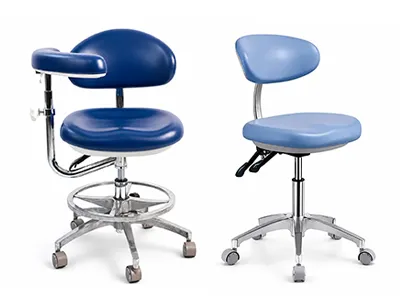
In a properly configured stool, these components are selected to work together. The caster size and mounting system should match the base, while the gas lift and wheel height should provide an appropriate seat-height range. This reduces compatibility problems and makes it easier to evaluate the complete stool’s comfort and movement.
Kinsun Dental provides a range of dental stools for dentists, assistants, clinics, distributors and dental equipment buyers. Different designs, colors and configurations are available for various working environments. We can also help B2B customers combine dental stools with dental chairs, lights, trolleys, accessories and other clinic equipment in one purchasing plan.
When selecting a model, customers can discuss their target market, preferred design, order quantity and application with the Kinsun team.
Frequently Asked Questions
For many dental clinics with tile, PVC, epoxy or laminate flooring, PU or TPR casters provide a useful combination of quiet movement, durability and floor protection. The best option still depends on the floor, stool design, expected load and working habits of the user.
PU casters are suitable for many common clinic floors. They are generally quieter and softer than nylon wheels while still offering good wear resistance. Buyers should confirm that the specific PU wheel is non-marking and suitable for the flooring used in their clinic.
Most dentist operator stools use non-braked casters because the dentist needs to move frequently during treatment. Brakes may be useful for certain assistant stools, laboratory stools or applications where the seat must remain in a fixed position.
Replace the wheels if they become difficult to roll, produce persistent noise, develop cracks or flat areas, leave marks, wobble or fail to swivel correctly. Loose caster connections should also be inspected promptly.
Yes, many dental stool casters can be replaced. However, the new wheels must match the original mounting type, stem dimensions, wheel diameter and installed height. When several wheels are worn, replacing the complete set usually gives more consistent results.
Conclusion
The right caster for a dental stool should provide smooth movement, reliable stability, low noise, floor protection and easy maintenance. For most dental clinics with hard flooring, PU or TPR casters are practical options, but the complete stool design and working environment must also be considered.
Kinsun Dental supplies dental stools for clinics, distributors and equipment projects. Explore our dental stool range or contact us for product recommendations, wholesale prices and support with mixed dental equipment orders.